
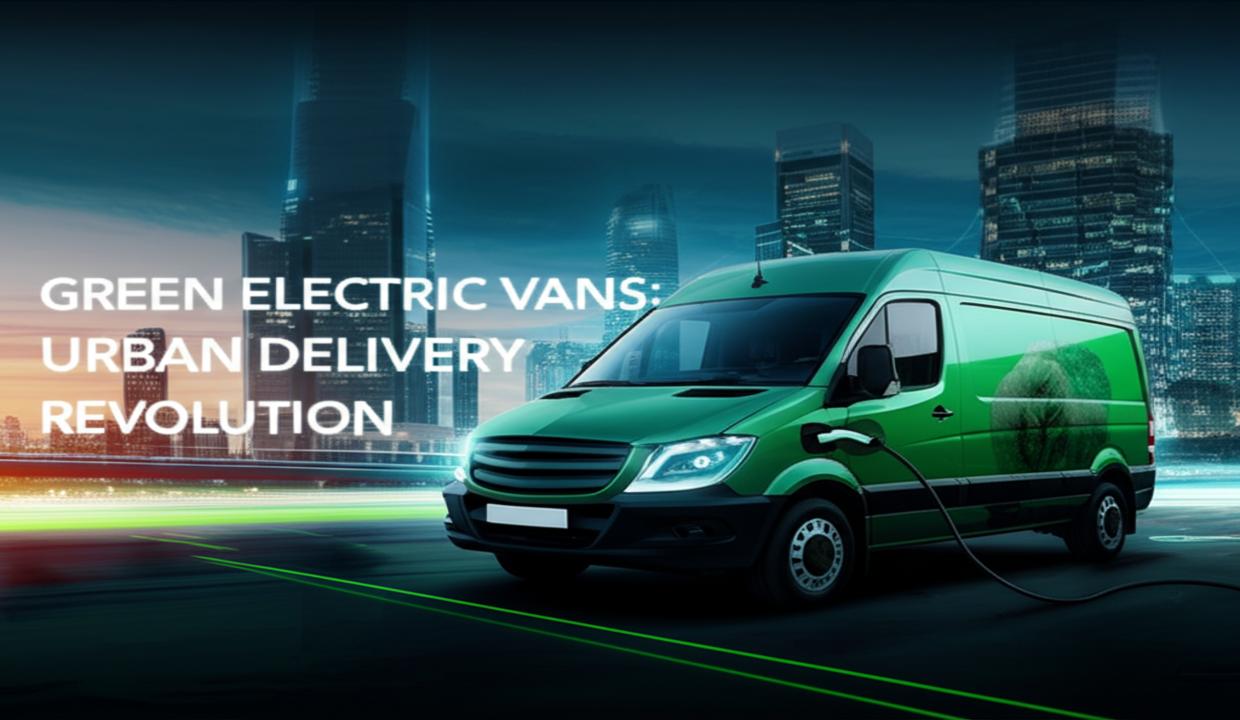
The urban landscape is rapidly evolving, and with it, the demands of modern logistics. As businesses strive for greater efficiency and reduced environmental impact, a revolutionary shift is taking place in how goods are transported within our cities. Enter Green Fleet Solutions Electric Vans for Last-Mile Delivery – a cornerstone technology transforming urban logistics. These innovative vehicles are not just a trend; they are becoming the standard, offering unparalleled cost efficiency, environmental friendliness, and advanced technological integration designed specifically for the unique challenges of metropolitan deliveries.
This article will delve into how these cutting-edge electric vans are redefining sustainable logistics, exploring their core working principles, recent breakthroughs, real-world applications, and the myriad benefits they bring. We will also peek into their future potential and address current limitations, providing a comprehensive overview for anyone interested in the future of green last-mile delivery. Prepare to discover how electric delivery vehicles are paving the way for a cleaner, quieter, and more efficient urban future.
Main Highlights: Green Fleet Solutions Electric Vans for Last-Mile Delivery
At the heart of modern urban logistics, electric vans are emerging as the preferred choice for forward-thinking companies. They represent a significant leap forward from traditional internal combustion engine vehicles. These solutions prioritize sustainability without compromising on operational effectiveness.
By leveraging advanced battery technology and smart fleet management systems, these vans promise reduced carbon footprints and significant long-term savings. They are meticulously designed to navigate congested city streets while minimizing noise and pollution, ensuring a healthier urban environment for everyone. This commitment to both ecological and economic benefits positions them as key players in the future of sustainable last mile delivery.
Performance and Key Features
Green Fleet Solutions’ electric vans are engineered for the rigorous demands of last-mile delivery, boasting impressive performance characteristics. At their core, these vehicles operate on battery-powered electric motors, guaranteeing zero tailpipe emissions. This fundamentally alters their environmental impact, significantly reducing urban air pollution and the overall carbon footprint compared to traditional diesel vehicles.
Typical battery ranges extend to approximately 200 km per charge, a capacity perfectly suited for the multiple daily delivery trips common in last-mile logistics. To support continuous and efficient fleet operations, these vans are compatible with advanced charging infrastructure, including rapid fast chargers and strategically located depot-installed stations. This ensures minimal downtime and maximum operational readiness for your green fleet.
Design, Interior, and Comfort
While the primary focus of electric delivery vans is functionality and efficiency, their design, interior, and driver comfort are also critical. Modern electric vans often feature ergonomic cabins designed for ease of entry and exit, crucial for drivers making frequent stops. The layout of the controls is intuitive, allowing drivers to focus on the road and delivery tasks.
Furthermore, the quiet operation of an electric motor vastly improves the working environment for drivers, reducing fatigue during long shifts. The cargo areas are typically optimized for various parcel sizes, with flexible shelving and secure fastening points, ensuring goods are transported safely and efficiently. The overall design prioritizes robustness and durability to withstand the daily rigors of urban delivery.
Technology and Safety
The integration of cutting-edge technology is a hallmark of modern electric delivery vehicles, enhancing both efficiency and safety. Recent innovations include substantial improvements in battery technology, leading to longer ranges and remarkably faster charging times. This continuous advancement is crucial for maintaining operational uptime and extending delivery capabilities.
Perhaps most impactful is the integration with sophisticated smart logistics platforms. These systems utilize advanced algorithms for real-time route optimization, significantly reducing travel times and fuel consumption. Many vans now feature telematics and AI support, providing valuable data for fleet management and further refining delivery processes. Beyond efficiency, safety is paramount, with many models incorporating advanced driver-assistance systems (ADAS) for improved urban navigation.
Real-World Impact: Successful Use Cases
Electric vans have moved beyond concept to widespread adoption, proving their mettle in real-world logistics operations. Companies globally are embracing these vehicles to meet stringent government regulations and reduce their environmental footprint. A prime example is Red Sea Global’s impressive fleet. Their adoption of electric delivery vans results in a staggering reduction of approximately 116 tons of CO₂ emissions per month. This significant impact is equivalent to dozens of long-haul flights being avoided, powerfully demonstrating the tangible environmental benefits while simultaneously bolstering public health and sustainability ratings. This is a true testament to the power of a dedicated green fleet.
Another excellent illustration comes from Alkè, a provider of customizable electric vans. Their vehicles are equipped with real-time monitoring and advanced fleet management capabilities, making them ideal for navigating dense city centers. By optimizing deliveries and providing crucial operational data, Alkè’s solutions demonstrably reduce costs and enhance efficiency. These examples underscore how electric vans are not just environmentally friendly but also economically viable, driving meaningful change in the last mile delivery sector. They exemplify a practical approach to sustainable logistics that delivers measurable results.
Benefits and Applications
Adopting electric vans for last mile delivery offers a compelling array of benefits, impacting environmental health, economic viability, operational efficiency, and regulatory compliance. These advantages make a strong case for transitioning to a green fleet.
- Environmental Impact: The most immediate benefit is zero tailpipe emissions. This dramatically improves air quality in dense urban areas, reducing smog and particulate matter. It also contributes significantly to lowering overall carbon footprints, supporting global climate goals.
- Economic Advantages: Companies stand to gain substantial long-term savings. Electric vehicles incur significantly lower fuel and maintenance costs compared to their diesel counterparts. EVs require fewer moving parts, leading to less frequent and simpler maintenance (e.g., no oil changes, simpler drivetrains). Furthermore, the stability of electricity prices compared to volatile fossil fuel costs enhances budgeting predictability.
- Operational Efficiency: Electric vans offer quieter operation, a major benefit that enables deliveries during noise-restricted hours in residential zones. Their integration with advanced telematics and AI-powered routing systems supports highly efficient routing, reducing delivery times and optimizing resource allocation. This makes them ideal electric delivery vehicles for demanding urban environments.
- Regulatory Compliance: As cities worldwide implement stricter emission standards and introduce low-emission zones, electric vans naturally meet and exceed these increasing government mandates for cleaner transportation solutions. This ensures businesses remain compliant and avoid potential fines or access restrictions.
Future Potential and Addressing Limitations
The future of electric vans in last-mile delivery is exceptionally promising, with ongoing advancements continually addressing current limitations. While the upfront costs of electric vans can sometimes be higher than traditional diesel counterparts, this gap is steadily narrowing. Governments worldwide are actively promoting adoption through various tax incentives, grants, and subsidies, significantly improving affordability for businesses looking to transition to a green fleet.
Technological progress is also rapidly enhancing the practicality of these vehicles. Expanding fast-charging networks are making range anxiety a relic of the past, reducing downtime and extending operational capabilities. Enhanced battery longevity also promises a longer service life for electric delivery vehicles. The most revolutionary development on the horizon is the advent of autonomous electric delivery vehicles. Companies like Nuro and Starship Technologies are developing AI-powered driverless EV vans and robots that navigate urban environments autonomously. This innovation holds the potential to further revolutionize last-mile logistics by dramatically lowering labor dependency and increasing delivery speed.
Despite these advancements, challenges remain, particularly around the comprehensive rollout of charging infrastructure and managing vehicle range for exceptionally long or complex routes. However, continuous investments in technology and infrastructure development are robustly addressing these issues, paving the way for a more efficient and sustainable future in logistics.
What’s New in 2025?
The year 2025 marks a pivotal moment for electric delivery vehicles, with a particular focus on autonomous solutions. A significant highlight comes from Viva Technology’s July 2025 insights, showcasing how cutting-edge autonomous electric delivery vehicles are designed to solve long-standing last-mile challenges. These innovations combine advanced AI navigation, real-time tracking, and sophisticated autonomous driving capabilities.
The core objective of these new developments is to drastically reduce operational costs and significantly lower the carbon impact of urban deliveries. The spotlight remains on pioneers like Nuro and Starship Technologies, who are actively advancing this field with their ground-breaking driverless electric vans and delivery robots. This era promises a future where a significant portion of urban logistics is handled by intelligent, self-driving electric vans, further solidifying their role in sustainable logistics.
Pricing and Variants
While specific pricing for “Green Fleet Solutions Electric Vans” isn’t provided, it’s important to understand the evolving cost landscape. Initially, the upfront investment for an electric van can be higher than a traditional diesel model. However, this is increasingly offset by lower operational costs, including significant savings on fuel and maintenance over the vehicle’s lifespan.
Furthermore, a growing number of governmental incentives, tax credits, and grants are designed to reduce the initial purchase barrier for businesses adopting a green fleet. Manufacturers are also introducing various variants, from compact city delivery vans suitable for dense urban cores to larger capacity models for wider last-mile delivery routes. These different options cater to diverse business needs, ensuring there’s an electric van solution for nearly every operational requirement in sustainable logistics.
Pros and Cons
| Pros | Cons |
|---|---|
| Zero Tailpipe Emissions: Improves urban air quality and reduces carbon footprint. | Higher Upfront Cost: Initial purchase price can be greater than diesel counterparts. |
| Lower Operating Costs: Significant savings on fuel (electricity vs. diesel) and reduced maintenance needs. | Charging Infrastructure: Availability of fast-charging points can be a limitation in some areas. |
| Quieter Operation: Enables deliveries during noise-restricted hours, improving urban living. | Range Anxiety: Concerns about battery range for very long or complex routes still exist for some. |
| Regulatory Compliance: Meets and exceeds growing government mandates for clean transportation. | Charging Time: Although improving, still longer than refueling a diesel vehicle. |
| Advanced Technology Integration: Benefits from smart logistics, route optimization, and emerging autonomous features. | Battery Degradation: Over a very long lifespan, battery capacity may slightly diminish. |
| Positive Public Image: Enhances brand reputation as an environmentally responsible business. |
Bonus Section
- Competitive Advantage of EVs: Electric vans offer a distinct competitive edge by aligning businesses with growing consumer and governmental preference for sustainable practices. Their low operational noise and zero emissions also provide a unique advantage for deliveries in sensitive urban areas or during off-peak hours, allowing businesses to expand their delivery windows and reach more customers efficiently. This makes them a critical component for a truly competitive last mile delivery service.
FAQ
- Q: How do electric vans contribute to a green fleet?
A: Electric vans are powered by batteries, producing zero tailpipe emissions. This significantly reduces urban air pollution and carbon footprints compared to traditional diesel vehicles, directly contributing to a cleaner, more sustainable green fleet for cities. - Q: What is the typical range of an electric van for last-mile delivery?
A: Most electric vans designed for last-mile logistics offer a typical battery range of around 200 km per charge. This is generally sufficient for multiple daily delivery trips within urban and suburban areas, supporting efficient daily operations. - Q: Are electric vans more expensive to maintain than diesel vans?
A: No, electric vans typically have lower maintenance costs. They possess fewer moving parts than internal combustion engine vehicles, eliminating needs like oil changes and complex exhaust system maintenance, leading to long-term savings. - Q: What are the latest breakthroughs in electric delivery vehicle technology?
A: Recent breakthroughs include advanced battery technology for longer range and faster charging, integration with smart logistics platforms for route optimization, and the development of autonomous electric delivery vehicles and robots by companies like Nuro and Starship Technologies. - Q: How do electric vans handle charging for commercial fleets?
A: Commercial electric van fleets utilize advanced charging infrastructure, including fast chargers and depot-installed charging stations, to ensure efficient operations. Many logistics hubs are now equipped with multiple charging points to manage entire fleets simultaneously, minimizing downtime.
Conclusion
The transformation of last-mile delivery is well underway, with Green Fleet Solutions Electric Vans leading the charge. These advanced electric delivery vehicles are more than just a mode of transport; they are a strategic investment in efficiency, sustainability, and future-proofing logistics operations. By offering zero emissions, significant economic savings through lower fuel and maintenance costs, and operational advantages like quieter deliveries, they are redefining urban commerce.
The ongoing advancements in battery technology, smart logistics integration, and the exciting prospect of autonomous delivery vehicles underline their immense future potential. Embracing these innovations is not just about adopting a new vehicle; it’s about committing to a cleaner, smarter, and more sustainable approach to connecting businesses with their customers. The future of sustainable logistics is undeniably electric, quiet, and efficient.
We hope this deep dive into electric vans for last mile delivery has provided valuable insights. Feel free to share your thoughts in the comments below, or explore more fascinating articles on our site. You can also learn more About Us and how we champion green solutions. For any inquiries, please don’t hesitate to Contact us directly. #GreenLogistics #ElectricVans
The Future of Last-Mile Delivery
Disclaimer: All images and videos are sourced from public platforms like Google and YouTube. If any content belongs to you and you want credit or removal, please inform us via our contact page.