
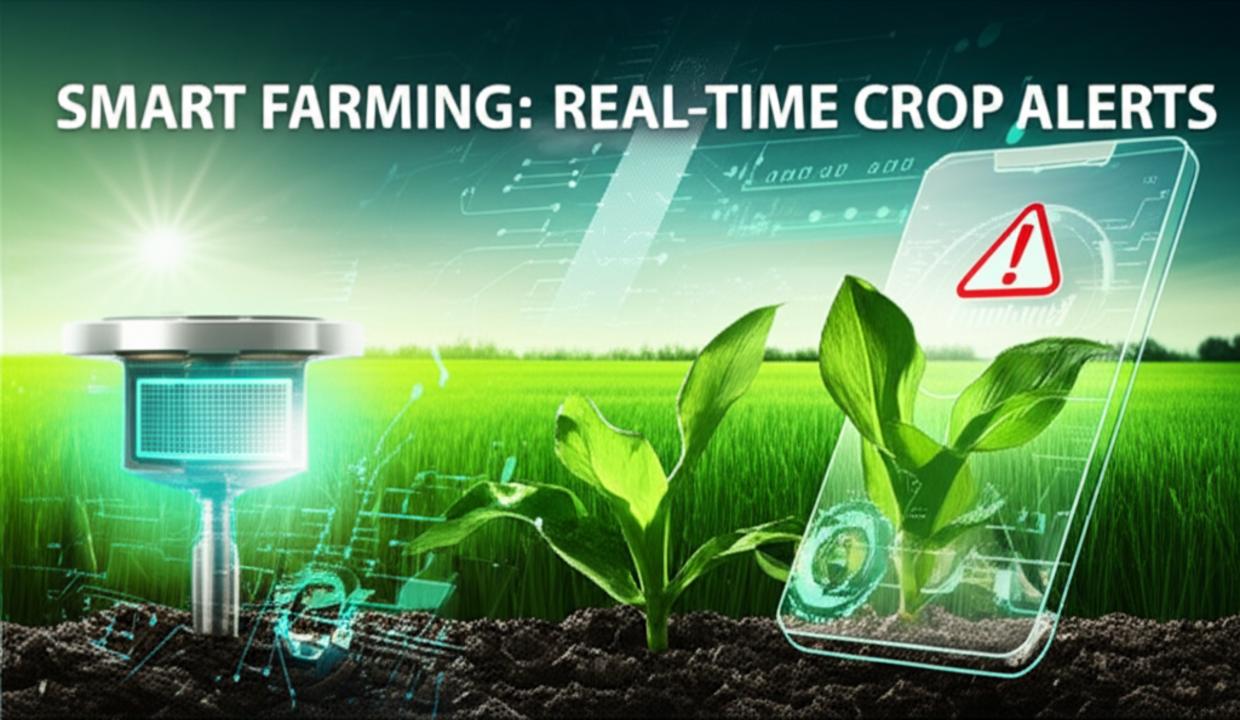
Are you a farmer looking to revolutionize your yield and streamline your operations? The future of agriculture is here, powered by ingenious agri plant monitoring sensors. Imagine knowing the exact needs of your crops, minute by minute, without stepping foot into the field. This article dives deep into how these cutting-edge sensors deliver real-time crop alerts, transforming traditional farming into a precise, responsive, and incredibly efficient endeavor.
We’ll explore the technology behind these vital tools, their unparalleled benefits, and what innovations are blooming in 2025 to help you achieve unprecedented success. Get ready to discover how smart farming can boost your yields and conserve precious resources.
Main Highlights: Agri Plant Monitoring Sensors: Real-Time Crop Alerts
At the heart of modern agriculture lies the ability to make timely, informed decisions. Agri plant monitoring sensors are the eyes and ears of your farm, continuously tracking critical environmental and crop parameters. These include everything from soil moisture levels to ambient temperature, humidity, and even the nutritional health of your plants.
When combined with advanced analytics, this constant stream of data enables precise and proactive management. Farmers receive instant real-time crop alerts, notifying them of potential issues like water stress, disease risks, or nutrient deficiencies before they become critical problems. This proactive approach is key to optimizing yield, conserving resources, and fostering sustainable farming practices.
Performance and Key Features
The efficacy of agri plant monitoring sensors stems from their ability to provide accurate and immediate data. Different sensor types target specific aspects of the plant and its environment, each playing a crucial role in painting a complete picture of farm conditions.
- Soil Moisture Sensors: These essential sensors measure the water content in the soil, often by detecting dielectric constants. By providing precise data on soil moisture, they help optimize irrigation schedules. This ensures plants receive the ideal amount of water, preventing both water stress and wasteful overwatering, which directly impacts root health and overall crop vitality.
- Temperature and Humidity Sensors: Understanding the microclimate around your crops is vital. These sensors deliver real-time data on air temperature and humidity. This information is critical for managing potential disease outbreaks, fine-tuning irrigation, and even timing harvests for optimal quality. Advanced versions can contribute to forecasting local weather impacts, allowing farmers to adapt proactively.
- Electrochemical Sensors: For insights into the very foundation of plant health, electrochemical sensors are invaluable. They detect soil nutrient levels, pH, salinity, and even pollutants like heavy metals. By converting chemical signals into electrical ones, they enable precise fertilization strategies, reducing the need for blanket applications and detecting contaminants early, thereby saving costs and protecting the environment. For more on sensor types, you can check out this blog on agricultural sensors.
- Wearable Plant Sensors: This innovative category represents a leap forward in direct plant monitoring. These flexible sensors attach directly to plants, continuously monitoring mechanical, optical, and chemical parameters. Often self-powered through energy-harvesting methods—such as clean energy, bioenergy, or triboelectricity—they utilize IoT-enabled wireless communication to transmit scalable, real-time data. This fascinating technology provides direct insights into plant physiological responses. Explore more about these sensors in this research on wearable biosensors.
Together, these diverse sensors form a comprehensive network, feeding critical data into a central system that empowers farmers with actionable intelligence.
Technology and Safety
The true power of agri plant monitoring sensors is unleashed when their data is integrated with sophisticated technologies. Modern farming platforms combine sensor data with remote sensing, satellite imagery, advanced data analytics, and artificial intelligence (AI).
These powerful integrations provide comprehensive insights throughout the entire crop lifecycle, from planting to harvest. The systems are designed to instantly alert farmers to risks such as water deficiency, disease onset, or suboptimal growing conditions. This early warning system enables timely interventions, preventing significant yield losses and promoting more sustainable agricultural practices.
The safety aspect isn’t just about protecting crops; it’s also about optimizing resource use. By knowing precisely when and how much to irrigate or fertilize, farmers reduce chemical runoff and conserve water, contributing to environmental safety and long-term land productivity. For a deeper look into such systems, a crop monitoring system example can show how integrated data works.
What’s New in 2025?
The year 2025 continues to push the boundaries of smart farming technology. We’re seeing even more robust integration of AI into sensor platforms, leading to more predictive and prescriptive analytics. Farmers aren’t just getting alerts; they’re receiving precise recommendations on corrective actions.
Miniaturization and improved battery life (or even energy harvesting capabilities) are making sensors more deployable and less maintenance-intensive. The adoption of 5G connectivity in rural areas is further accelerating real-time data transfer, making instantaneous alerts a global reality. Expect user interfaces to become even more intuitive, bringing complex data insights directly to farmers’ fingertips via mobile apps.
Pricing and Variants
The cost of implementing agri plant monitoring sensors varies widely, depending on the scale of your farm, the types of sensors needed, and the sophistication of the monitoring platform. Entry-level systems offering basic soil moisture and temperature readings can be relatively affordable, making them accessible for smaller operations or pilot projects.
More comprehensive systems, incorporating a wider array of sensors for nutrient analysis, plant health, and environmental factors, along with advanced AI-driven analytics, represent a larger investment. These enterprise-level solutions often come with subscription-based software services and offer greater scalability and detailed reporting. Factors like wireless range, battery life, data transmission methods (e.g., LoRaWAN, cellular), and the integration with existing farm management software also influence overall cost. It’s a spectrum, allowing farmers to choose solutions that fit their budget and specific needs.
Pros and Cons
| Pros | Cons |
|---|---|
| Improved resource efficiency (water, fertilizer) | Initial investment cost can be high |
| Higher crop yields and quality through early intervention | Requires some technical understanding or training |
| Significant reduction in manual labor for field inspections | Potential for sensor maintenance and calibration issues |
| Enhanced scalability and better decision support with IoT and AI | Reliant on connectivity and power sources |
| Promotes environmental sustainability (reduced runoff) | Data security and privacy concerns with cloud platforms |
| Access to granular, real-time data for precise actions | Integration challenges with legacy systems |
Bonus Section
Revolutionizing Crop Monitoring
Agri plant monitoring sensors are not just tools; they are integral components of a holistic crop monitoring ecosystem. While basic sensors provide essential data points, advanced systems leverage sophisticated algorithms to transform raw data into actionable intelligence. For instance, some platforms can predict disease outbreaks based on humidity and temperature trends combined with historical data, providing a critical window for preventive measures.
This goes beyond simple alerts; it’s about predictive analytics that empowers farmers to be proactive managers rather than reactive problem-solvers. Companies like Monnit offer various agriculture monitoring solutions, illustrating the breadth of applications for these sensors.
Expert Opinions: A Game Changer for Agriculture
Leading agricultural experts and technologists widely agree that smart farming technology, driven by robust sensor networks, is a true game-changer. They emphasize its potential to address global food security challenges while promoting environmental stewardship. According to industry analyses, the shift towards data-driven agriculture is irreversible, with sensor adoption rates steadily climbing. They highlight the seamless integration of hardware and software as the critical factor for widespread success, making these systems indispensable for the modern farmer.
As one expert recently stated, “The ability to have a digital twin of your farm, updated in real-time, is the ultimate advantage for maximizing every square meter of land.” Another common sentiment is that the precision afforded by agri plant monitoring sensors allows for the optimized use of inputs, a key factor in reducing operational costs and increasing profit margins.
FAQ
-
What are agri plant monitoring sensors?
Agri plant monitoring sensors are electronic devices designed to collect real-time data on environmental conditions and plant health indicators within an agricultural setting. They measure parameters like soil moisture, temperature, humidity, nutrient levels, and light intensity to provide actionable insights for farmers.
-
How do real-time crop alerts work?
Sensors continuously collect data, which is then transmitted wirelessly (via IoT) to a central platform. This platform uses data analytics and AI to interpret the information. If parameters fall outside optimal ranges or indicate potential issues, the system triggers immediate real-time crop alerts via mobile apps, emails, or dashboards, notifying the farmer to intervene.
-
What are the main benefits of using these sensors?
Key benefits include significantly improved resource efficiency (water, fertilizer), higher crop yields and quality, reduced labor through automation, enhanced decision-making via data analytics, and greater environmental sustainability due to optimized input use. They also help in early detection and prevention of issues like diseases or pests.
-
Are these sensors difficult to install and maintain?
While some technical understanding is beneficial, many modern agriculture sensors are designed for relatively easy installation with user-friendly guides. Maintenance typically involves periodic cleaning, battery checks (if applicable), and calibration. Many providers also offer support and managed services for easier adoption.
-
How accurate are the readings from these sensors?
The accuracy of sensor readings varies by type and quality. High-quality, calibrated sensors from reputable manufacturers provide highly accurate data, crucial for precision agriculture. Regular calibration and proper placement are important factors in ensuring consistent accuracy for effective crop monitoring.
Conclusion
In summary, agri plant monitoring sensors combined with IoT and AI technologies enable real-time crop alerts, fundamentally transforming traditional farming into a highly efficient and sustainable precision agriculture model. By providing continuous, accurate field data, these systems empower farmers to make timely and informed decisions that optimize yields, conserve resources, and protect the environment.
Embracing this smart farming technology is not just about adopting new tools; it’s about investing in the future of your farm and contributing to a more sustainable world. Ready to explore how these sensors can boost your yields? Feel free to contact us for more information or check out our About Us page to learn more about our mission. Don’t forget to share this article with fellow farmers who could benefit from this amazing technology! #SmartFarming #AgriTech #PrecisionAgriculture
Watch More in This Video
Disclaimer: All images and videos are sourced from public platforms like Google and YouTube. If any content belongs to you and you want credit or removal, please inform us via our contact page.