
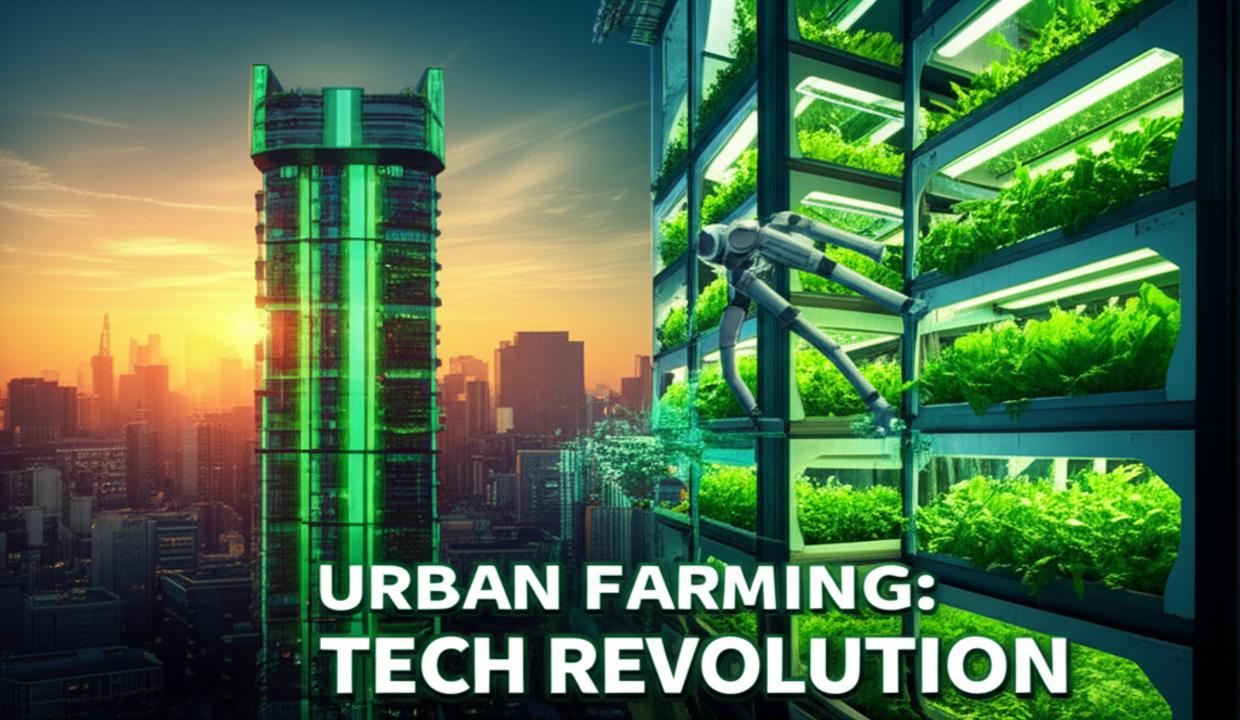
Imagine a bustling city, concrete jungle as far as the eye can see, yet vibrant green farms thrive right in its heart. This isn’t a futuristic dream; it’s the reality being built by innovative green organic farming startups. These trailblazers are merging cutting-edge technology with sustainable practices, revolutionizing how we produce food in urban environments. From rooftop gardens powered by artificial intelligence to vertical farms churning out fresh produce indoors, the movement towards tech-driven urban farms is gaining incredible momentum.
This article dives deep into the world of these transformative startups. We’ll explore the ingenious technologies they employ, the profound environmental benefits they deliver, and the exciting future they’re cultivating for our cities. Get ready to discover how farming technology is making fresh, organic food accessible, sustainable, and truly local.
Main Highlights: Green Organic Farming Startups: Tech-Driven Urban Farms
The core idea behind these innovative ventures is to bring agriculture closer to consumers, reducing the environmental footprint associated with traditional farming. By integrating advanced technology, these startups are making urban farming not just possible, but highly efficient and productive. They focus on optimizing resource use, ensuring eco-friendly production, and enhancing food security in dense urban areas.
Key to their success is a commitment to organic principles, meaning food is grown without synthetic pesticides or fertilizers. This combination of “green” and “tech” is what sets these startups apart, offering a blueprint for the future of food production. It’s about creating resilient food systems that are both environmentally sound and economically viable.
Innovations and Technologies Driving Urban Organic Farms
The heart of these green farming startups lies in their embrace of advanced agricultural technologies. Precision agriculture is at the forefront, leveraging data and automation to apply inputs only where and when needed. This significantly reduces waste and maximizes efficiency, a crucial factor in limited urban spaces.
Precision Agriculture & AI for Smarter Farming
Artificial Intelligence (AI) and computer vision are game-changers. Startups like Greeneye Technology utilize AI for highly targeted herbicide application. Their systems can distinguish between crops and weeds, spraying only the latter, leading to an astonishing reduction in chemical use – up to 90%. This isn’t just about saving money; it’s a massive leap forward for environmental sustainability.
Similarly, ecoRobotix develops AI-driven robots that perform ultra-high precision crop treatments. These autonomous, solar-powered weeding robots can decrease chemical use by 70-95%, minimizing environmental impact and promoting healthier ecosystems. Such innovations exemplify how urban farming tech is making a real difference.
Robotics and Vertical Farming for Urban Resilience
Robotics plays a vital role in automating routine tasks like planting, monitoring, and harvesting, freeing up human labor for more complex decisions. Alongside AI, robotics enables efficient cultivation in controlled environments. Vertical farming, a method of growing crops in vertically stacked layers, is perfectly suited for urban areas with limited horizontal space.
These integrated systems lead to significant resource savings. Water usage is drastically reduced through closed-loop hydroponic or aquaponic systems. Fertilizer application is precisely controlled, and pesticide dependency is lowered due to controlled indoor environments. This fosters unparalleled sustainability and resilience in dense cityscapes, offering fresh produce year-round.
Cultivating Sustainability: The Eco-Friendly Edge of Urban Organic Farming
The environmental advantages of these organic urban farms are immense and far-reaching. By growing food within or very close to urban centers, they drastically cut down on “food miles.” This means less transportation, fewer carbon emissions, and a fresher product for the consumer. It’s a direct counter to the energy-intensive global food supply chain.
Beyond transportation, urban organic farming contributes to a healthier urban environment in several ways. It reduces packaging waste, as produce often goes directly from farm to plate. Refrigeration needs are minimized, further saving energy. These farms are not just about food; they’re about transforming urban landscapes into greener, more livable spaces.
Reducing Urban Heat and Boosting Biodiversity
Rooftop gardens and vertical farms offer remarkable ecological benefits for cities. They play a crucial role in mitigating the urban heat island effect, where cities tend to be significantly warmer than surrounding rural areas. The plants absorb sunlight and release moisture, naturally cooling their surroundings and improving energy efficiency for buildings.
Moreover, these green spaces enhance urban biodiversity. By incorporating native plants and creating pollinator habitats, they support local ecosystems. Practices like composting and rainwater harvesting further maintain ecological balance, reducing pollution runoff and preserving precious water resources. This holistic approach makes them pillars of sustainable agriculture.
For more insights into how technology integrates with urban agriculture, you can explore resources on the topic. For instance, delve into the broader implications of integration of technology in urban agriculture.
Smart Solutions for Organic Crop Protection and Regenerative Practices
A key differentiator for green organic farming startups is their commitment to genuinely organic methods, which includes innovative approaches to crop protection and soil health. This moves beyond simply avoiding chemicals to actively fostering a healthier growing environment.
Innovative Organic Inputs for Crop Health
The development of organic pesticides and biofungicides is a burgeoning area. Startups like Green BTS are at the forefront, combining biotechnology with AI to create safer, eco-friendly crop protection solutions. Their products protect against a wide range of pathogens without the harmful side effects associated with conventional chemicals.
These bio-based solutions support long-term soil and plant health, contributing to a more resilient agricultural system. This focus on natural, sustainable inputs is vital for ensuring the integrity of organic urban farms and the health of the consumers who enjoy their produce.
Emerging Regenerative Farming Technologies
Regenerative agriculture aims to improve soil health, biodiversity, and ecosystem services. In urban settings, this translates into cutting-edge farming technology. Autonomous equipment designed for low-impact tilling minimizes soil disturbance, preserving its structure and microbial life. Drones are increasingly used to monitor soil and plant health from above, providing valuable data for precision interventions.
Precision diagnostic tools allow farmers to quickly identify issues and address them effectively, preventing widespread problems. Startups like SynergyAG exemplify this integration, combining crop genetics, protection, and nutrition with digital agronomy platforms. This enhances both farm efficiency and environmental stewardship, making urban farms more productive and sustainable.
You can discover more innovative companies and their contributions to this field by exploring guides on top organic farming startups.
What’s New for the Future of Urban Farming?
The urban farm sector is on the cusp of an even greater transformation. The trend is clearly towards highly automated, data-driven systems that promise to deliver nutrient-rich, organic foods with minimal environmental footprints. The continuous advancements in AI, robotics, and biotechnology are set to redefine what’s possible in urban food production.
Picture farms that operate almost autonomously, with AI constantly monitoring every plant, adjusting conditions, and predicting yields. Robotics will handle even more intricate tasks, from precise harvesting to pest management. This future will not only enhance yield and resource efficiency but also significantly contribute to urban sustainability.
These tech-driven urban organic farms are poised to become vital contributors to global food security and climate adaptation. They offer a powerful solution to growing populations and the challenges of traditional agriculture, creating food systems that are both productive and profoundly eco-friendly. The focus on local, fresh, and organic produce is not just a niche; it’s becoming a mainstream necessity.
The Business of Green Urban Farming: Impact and Investment
Beyond the environmental benefits, green organic farming startups are also creating significant economic and social impact. They represent a new frontier for investment, attracting capital from those looking to support sustainable solutions. These ventures often create local jobs, from farm managers and tech specialists to distribution and marketing teams, fostering vibrant local economies.
The value proposition for consumers is clear: access to exceptionally fresh, healthy, and sustainably grown organic produce, often delivered within hours of harvest. This proximity strengthens community ties and provides transparency in the food chain. As urban populations continue to grow, the demand for such localized, high-quality food sources will only increase, making these startups attractive long-term investments.
Discover more about the companies and innovations transforming the agricultural landscape, including those in regenerative farming, through resources like the top companies transforming regenerative farming.
Pros and Cons
| Pros | Cons |
|---|---|
| Reduced food miles and carbon footprint | High initial setup costs for advanced tech |
| Consistent, year-round organic produce | Can be energy-intensive (lighting, climate control) |
| Significant water and resource efficiency | Requires specialized technical expertise |
| Improved urban air quality and biodiversity | Scalability challenges in very dense areas |
| Local job creation and economic growth | Potential for reliance on complex systems |
| Increased food security in urban centers | Less natural light exposure for plants (in some setups) |
Challenges and Opportunities for Green Farming Startups
While the promise of green farming startups is immense, they also face unique challenges. High initial capital investment for cutting-edge urban farming tech can be a barrier. Operating sophisticated systems requires specialized skills, and continuous innovation is needed to stay competitive. Energy consumption, especially for indoor vertical farms requiring artificial lighting, remains a concern, though renewable energy integration is a growing trend.
However, these challenges also present opportunities. The need for energy efficiency drives innovation in LED lighting and HVAC systems. The demand for skilled labor creates new educational and training pathways. As consumer awareness about sustainable food grows, so does the market for these innovative farms. Partnerships with urban developers, restaurants, and local governments are key to scaling these operations and integrating them fully into city infrastructure. The future is ripe for innovation in #urbanagriculture.
For more on how AI is shaping agriculture, you can explore insights on AI agriculture startups.
FAQ
- What is a green organic farming startup?
These are businesses that use advanced technology, like AI, robotics, and vertical farming, to grow organic produce in urban settings. Their aim is to produce food sustainably, reduce environmental impact, and provide fresh, local produce to city dwellers. They combine ecological principles with high-tech solutions. - How do these startups make farming more sustainable?
They achieve sustainability by significantly reducing food miles, minimizing water usage through closed-loop systems, cutting down on carbon emissions, and eliminating synthetic pesticides and fertilizers. Many also incorporate regenerative practices that improve soil health and enhance urban biodiversity. - What kind of technology is used in urban farming?
Key technologies include precision agriculture (e.g., targeted spraying), AI for crop monitoring and pest control, robotics for automated tasks, vertical farming systems for maximizing space, and advanced sensors for environmental control. These tools optimize growth conditions and resource use. - What are the benefits of organic urban farms for city residents?
Residents gain access to fresher, healthier, and locally grown organic produce. These farms also contribute to greener cities by mitigating the urban heat island effect, improving air quality, and creating new green spaces. They can also enhance local food security. - Are organic urban farms a viable solution for future food security?
Yes, they hold immense potential. As urban populations grow, these farms offer a way to decentralize food production, reduce reliance on long supply chains, and adapt to climate change challenges. Continued technological advancements will further enhance their viability and contribution to global food security.
Conclusion
The rise of green organic farming startups marks a pivotal moment in the evolution of our food systems. By masterfully blending cutting-edge urban farming tech with deeply rooted principles of sustainable agriculture, these innovators are not just growing food; they are cultivating healthier communities, cleaner environments, and more resilient urban landscapes. From AI-driven precision to robotic automation, the future of food is taking root in our cities, proving that even in the most urbanized settings, nature and technology can thrive in harmony.
The journey towards a more sustainable and localized food future is well underway, led by these visionary organic urban farms. We invite you to learn more about this exciting field by exploring further articles on our site. You can also connect with us on our Contact page if you have any questions or feedback. Read more about us on our About Us page to discover our mission in highlighting such groundbreaking innovations.
Watch More in This Video
For a deeper dive into how robotics and AI are revolutionizing vertical farms in urban environments, check out this insightful video:
Disclaimer: All images and videos are sourced from public platforms like Google and YouTube. If any content belongs to you and you want credit or removal, please inform us via our contact page.