
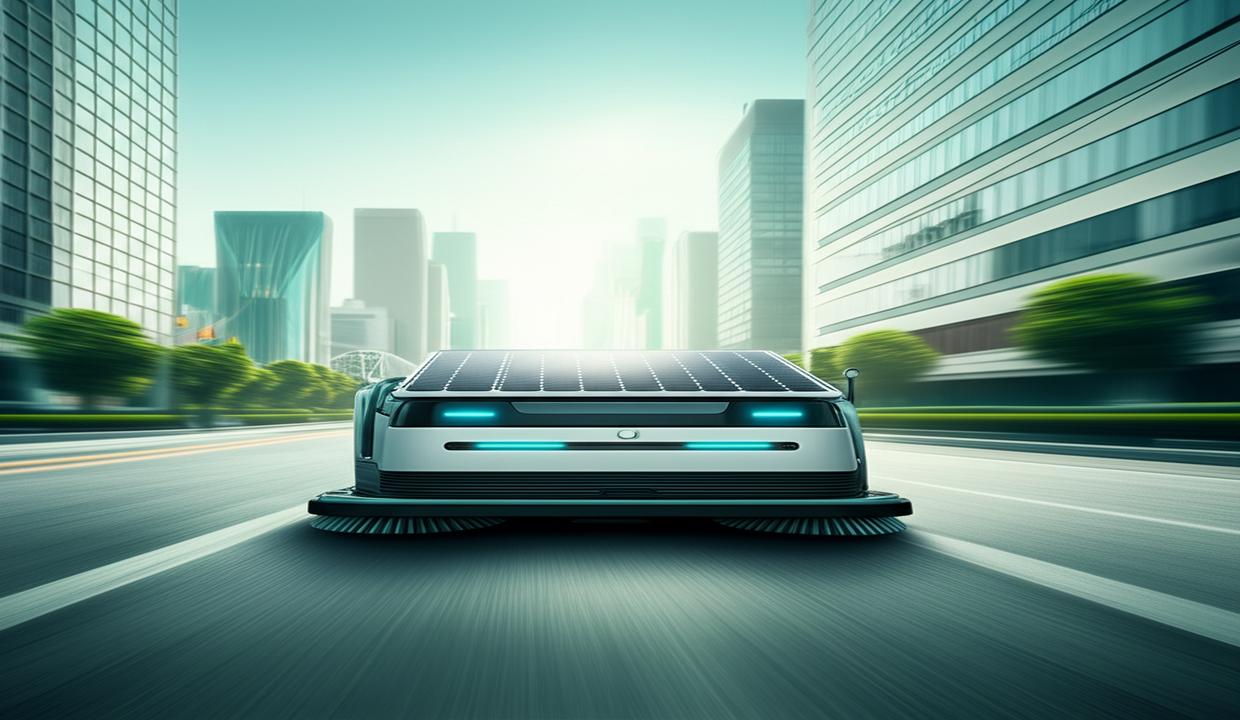
Imagine a city where clean streets aren’t just a dream, but a daily reality, achieved silently and sustainably. This vision is rapidly coming to life thanks to groundbreaking advancements in robotics and renewable energy. We’re talking about the rise of solar-powered street cleaning robots, autonomous machines that are set to revolutionize how our urban environments are maintained. These innovative devices represent a significant leap forward in green city initiatives, offering a powerful combination of efficiency, environmental responsibility, and economic benefits.
This article will dive deep into the world of these remarkable machines. We’ll explore their core technologies, examine real-world examples making a difference today, and uncover the immense potential they hold for fostering cleaner, greener, and more livable cities. From reducing carbon footprints to optimizing urban cleaning operations, understanding these robots is key to envisioning the future of sustainable urban living.
The Dawn of Sustainable Urban Cleaning
The concept of a truly “green city” goes beyond just parks and public transport; it extends to every aspect of urban infrastructure, including waste management and cleanliness. Traditional street cleaning often relies on large, fossil fuel-powered vehicles, contributing to air and noise pollution. This is where solar-powered street cleaning robots step in as a game-changer for urban cleaning technology. They harness the sun’s energy, providing an alternative that’s both powerful and planet-friendly.
These robots are designed to operate autonomously, navigating city streets to collect litter and debris. By leveraging solar power, they significantly reduce operational costs associated with fuel and lower the environmental impact of city maintenance. Their deployment is a clear indicator of a city’s commitment to sustainability and embracing innovative eco-friendly city solutions for a healthier future. It’s a quiet revolution, transforming the very fabric of urban hygiene.
How Solar-Powered Robots Work Their Magic
At the heart of every solar street cleaning robot lies a sophisticated blend of engineering and artificial intelligence. These autonomous machines typically feature solar panels prominently mounted on their structure, which continuously absorb sunlight to power their operations. This allows them to work throughout the day, often without needing external charging, maximizing their efficiency and uptime.
Beyond solar power, these robots integrate advanced sensor arrays, GPS navigation, and AI-driven software. These components enable them to accurately map their environment, detect obstacles, identify areas needing cleaning, and optimize their routes. Their specialized cleaning mechanisms can vary, from powerful vacuum systems that suction up debris to rotating brushes that sweep surfaces clean, ensuring comprehensive waste collection.
The integration of IoT (Internet of Things) connectivity further enhances their capabilities. City management can monitor the robots’ performance, track their location, and receive real-time data on their cleaning progress. This connectivity also facilitates predictive maintenance, ensuring these complex machines remain operational and efficient for longer periods, contributing to their overall value proposition.
Pioneering the Path: The Solar Umba 4000 and Beyond
The vision of solar-powered urban cleaning is no longer confined to blueprints; it’s being actively realized in cities worldwide. A prime example of this emerging technology is the Solar Umba 4000. This innovative robot made its debut in Austin, Texas, on Earth Day 2024, marking a significant milestone in the adoption of sustainable urban maintenance solutions.
The Solar Umba 4000 is a substantial solar-powered street sweeper. It’s equipped with powerful vacuum components capable of collecting up to 110 pounds of trash autonomously. Capable of moving at speeds up to 12 mph, it operates efficiently during daylight hours, powered entirely by the solar panels integrated into its design. Its introduction showcases the practical application and effectiveness of solar energy in addressing urban waste and promoting sustainability.
While the Umba 4000 focuses specifically on street cleaning, the broader field of solar-powered robotics has also seen advancements in related areas. For instance, solar panel cleaning robots, such as SandStorm by Enel Green Power, operate autonomously to maintain solar farms. These robots use methods like rotating brushes, water sprays, and vacuum suction to remove dust and debris from photovoltaic panels. Such innovations in maintaining renewable energy infrastructure provide valuable insights and technological inspiration for future urban street cleaning robots, showcasing the versatility of autonomous, solar-powered systems. Autonomous and sustainable robotic solutions are indeed shaping multiple sectors.
Environmental and Economic Advantages: Why Go Solar?
The adoption of solar street cleaning robots brings a cascade of benefits, making them a cornerstone of modern green city initiatives. These advantages span environmental protection, economic efficiency, and even social progress.
- Reduced Emissions: By replacing fossil-fuel-powered street sweepers, solar robots drastically cut down on greenhouse gas emissions and air pollutants. This leads to cleaner air, improving public health and contributing to a city’s climate goals.
- Lower Operational Costs: Solar energy is free once the initial investment in the robot is made. This eliminates fuel costs and significantly reduces long-term operational expenses for municipal cleaning departments.
- Water Conservation: Many advanced cleaning robots incorporate dry cleaning methods or highly efficient water-spray systems, leading to lower water usage compared to traditional methods, a critical factor in water-stressed regions.
- Minimized Disruptions: These robots can operate quietly and often during off-peak hours, such as nighttime, without disturbing residents or disrupting daytime traffic flow. Their autonomous nature means fewer human operators are needed on the streets.
- Job Creation: While automating certain tasks, the deployment of such advanced technology fosters new specialized jobs in robotics maintenance, data analysis, and system management, contributing to green economy growth and skilling up the workforce.
- Enhanced Efficiency: With AI-driven route optimization and continuous solar power, these robots can maintain a consistent cleaning schedule, ensuring higher standards of urban cleanliness round the clock. Solar-powered waste cleaning robots truly redefine efficiency.
These multifaceted benefits underscore why investment in eco-friendly city solutions like solar-powered cleaning robots is not just an environmental choice, but a strategic economic one for urban planners.
Advanced Robotics and Autonomous Operation
The intelligence embedded within these cleaning robots is as crucial as their power source. Modern models are at the forefront of robotic innovation, integrating sophisticated technologies to ensure optimal performance and safety. Cleaning robots for solar panels, for instance, demonstrate the advanced capabilities that are transferable to street cleaning.
Key technological advancements include:
- Artificial Intelligence (AI): AI algorithms enable robots to learn from their environment, adapt to changing conditions, and make autonomous decisions, such as identifying heavily soiled areas or avoiding obstacles.
- GPS Navigation: Precise GPS systems allow robots to know their exact location and follow pre-programmed cleaning routes with high accuracy, ensuring no area is missed.
- IoT Connectivity: Beyond mere tracking, IoT platforms facilitate remote diagnostics, software updates, and data collection, allowing for continuous improvement and proactive maintenance.
- Sensor Fusion: A combination of cameras, lidar, ultrasonic sensors, and radar provides a comprehensive understanding of the robot’s surroundings, crucial for safe navigation in dynamic urban environments.
- Waterless Technologies: Inspired by solar panel cleaning, some urban cleaning robots are exploring waterless methods using specialized brushes or vacuum systems, further enhancing their ecological footprint. Companies like Airtouch and Jetsons Robotics are pioneers in AI-driven waterless solutions for large-scale commercial installations, hinting at the future of urban cleaning.
These technological integrations ensure that urban cleaning technology is not only sustainable but also highly effective and reliable, ready to tackle the challenges of modern cities. The continued development in this sector promises even more advanced and versatile robots for the future.
Integrating Solar Robotics into Green City Initiatives
The successful deployment of solar street cleaning robots goes beyond just purchasing the machines; it involves a holistic integration into a city’s broader green city initiatives. Urban planners are increasingly looking at how these robots fit into smart city frameworks, where technology and sustainability converge.
This integration includes:
- Infrastructure Adaptation: Ensuring charging points (if auxiliary charging is needed) are solar-powered or grid-connected to renewable sources.
- Policy Development: Creating regulations and guidelines for autonomous robot operation in public spaces, addressing safety, data privacy, and traffic interaction.
- Public Education: Engaging citizens to understand and accept these new urban caretakers, highlighting their benefits for the environment and community well-being.
- Data-Driven Management: Utilizing the data collected by robots to optimize cleaning schedules, identify problem areas, and assess the effectiveness of waste management strategies.
- Partnerships: Collaborating with robotics companies and research institutions to foster innovation and pilot new technologies, ensuring cities remain at the cutting edge of sustainability. Understanding solar panel cleaning robots is a step towards appreciating this collaborative growth.
By thoughtfully integrating these robots, cities can create a truly synergistic ecosystem where technology enhances environmental efforts, leading to a more sustainable and pleasant urban experience for everyone. This represents a tangible step towards achieving the United Nations’ Sustainable Development Goals for cities.
Challenges and Future Outlook
While the prospects for solar-powered street cleaning robots are incredibly bright, their widespread adoption isn’t without its challenges. Initial investment costs can be higher than traditional equipment, though long-term savings often outweigh this. Navigating complex urban environments with diverse obstacles and unpredictable human behavior also requires continuous advancements in AI and sensor technology.
However, the future outlook remains overwhelmingly positive. Research and development are rapidly progressing, driving down costs and enhancing capabilities. We can anticipate robots becoming even more intelligent, versatile, and specialized for various urban cleaning tasks. Future models might integrate advanced waste sorting capabilities, real-time pollution monitoring, or even act as mobile Wi-Fi hotspots, further enhancing their value to the urban fabric.
The trend shows increasing deployment in both solar farm maintenance and urban environmental management, with growing attention to integrating renewable energy with robotics for sustainable city infrastructure. The concept of “Robots as a Service” (RaaS) could also make these advanced machines more accessible to cities of all sizes. The journey towards truly #cleanerandgreener cities is well underway, with these silent, solar-powered heroes leading the charge.
Watch More in This Video
FAQ
- What exactly is a solar street cleaning robot?
A solar street cleaning robot is an autonomous machine designed to clean urban environments using solar energy. It typically combines solar panels for power with advanced sensors, AI, and specialized cleaning mechanisms like vacuums or brushes to collect trash and debris, reducing pollution and operational costs.
- How do these robots benefit green city initiatives?
They contribute to green city initiatives by reducing reliance on fossil fuels, cutting down on greenhouse gas emissions, lowering water usage with efficient cleaning methods, and operating quietly to minimize urban disruptions. They also support the growth of a green economy by creating specialized jobs.
- Are solar cleaning robots efficient in collecting waste?
Yes, modern solar cleaning robots are highly efficient. Models like the Solar Umba 4000 can collect significant amounts of trash (up to 110 pounds) and cover large areas effectively. Their AI and GPS ensure optimal route planning and thorough cleaning.
- Can these robots operate in all weather conditions?
Most solar-powered robots are designed for outdoor operation and can handle various conditions. However, extreme weather like heavy rain, snow, or high winds might limit their effectiveness or require them to cease operations for safety. Their continuous operation relies on sufficient daylight for solar charging.
- What’s the difference between solar street cleaning robots and solar panel cleaning robots?
Solar street cleaning robots, like the Solar Umba 4000, are designed for general urban waste collection. Solar panel cleaning robots, such as SandStorm, specifically clean photovoltaic panels to maintain energy efficiency. While their applications differ, they share similar underlying autonomous and solar-powered technologies.
Conclusion
The emergence of solar-powered street cleaning robots marks a pivotal moment in the evolution of green city initiatives. These autonomous, eco-friendly machines offer a compelling solution for urban cleanliness, addressing environmental concerns while simultaneously delivering economic benefits. From the impressive capabilities of the Solar Umba 4000 in Austin to the advanced AI and sensor technologies driving their efficiency, these robots are transforming our urban landscapes.
As cities worldwide strive for greater sustainability, the integration of such innovative urban cleaning technology becomes not just an option, but a necessity. They symbolize a future where technology works in harmony with nature, creating cleaner, healthier, and more vibrant spaces for everyone. The journey towards sustainable urban living is complex, but with these remarkable robots, we’re taking giant, solar-powered steps forward. We invite you to explore more about our vision for a greener future. To learn more about us, visit our About Us page, or if you have any questions, feel free to Contact us.
Disclaimer: All images and videos are sourced from public platforms like Google and YouTube. If any content belongs to you and you want credit or removal, please inform us via our contact page.