
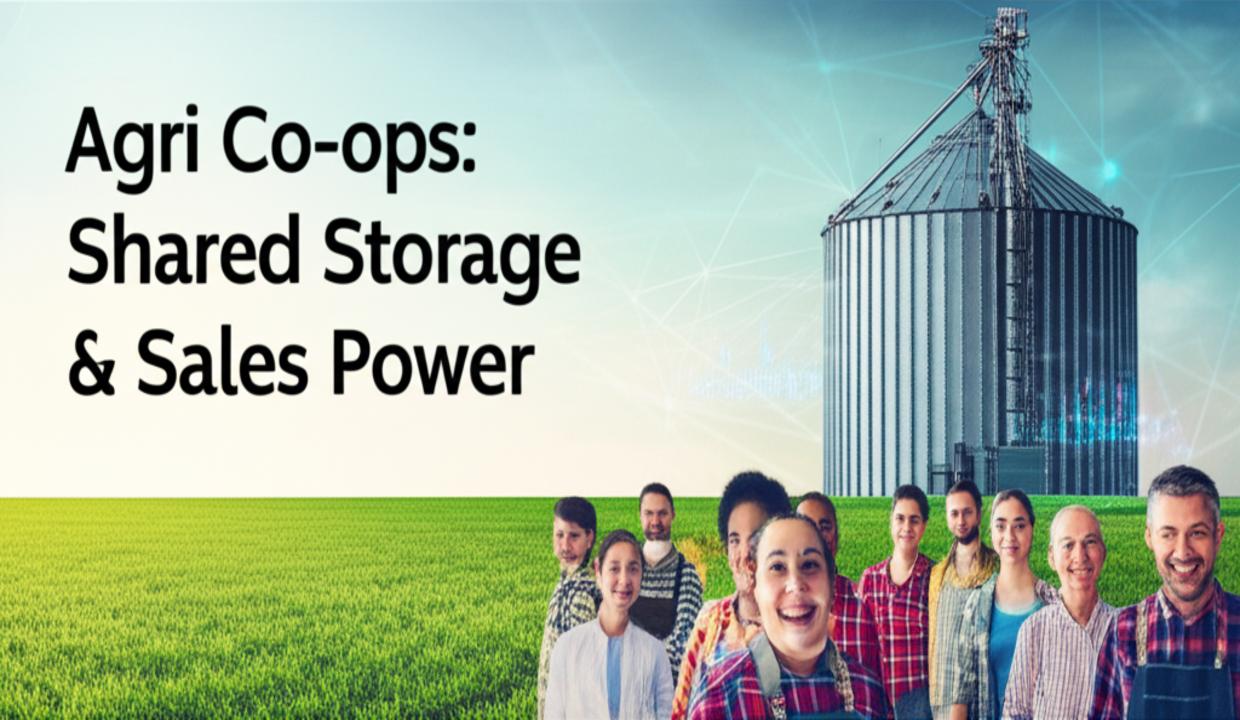
In the evolving landscape of global agriculture, farmer co-ops are emerging as a beacon of innovation and resilience. These collaborative structures empower individual farmers by pooling resources, significantly impacting everything from crop cultivation to market access. The core idea is simple: by working together, farmers can achieve what would be impossible alone. This article dives deep into how agricultural co-ops are transforming the sector, specifically focusing on shared storage facilities and collective sales platforms.
Imagine a world where small-scale farmers, often vulnerable to market fluctuations and post-harvest losses, gain unprecedented stability and profitability. This vision is rapidly becoming a reality through the strategic implementation of shared infrastructure and advanced digital tools. We’ll explore the tangible benefits, innovative technologies, and the forward-looking trends shaping the future of farmer co-ops in 2025 and beyond. Prepare to discover how these cooperative models are boosting farmer profits and fostering a more sustainable agricultural ecosystem.
The Power of Collective Action: Shared Platforms for Growth
Agri farmer cooperatives operate on a fundamental principle of shared ownership and mutual benefit. They are farmer-owned organizations designed to aggregate resources, leading to collective advantages that individual producers simply cannot access. This model effectively lowers operational costs for members, significantly enhances their bargaining power in the market, and opens doors to broader market opportunities. By aggregating produce, cooperatives achieve a scale that benefits all members, from better pricing to streamlined logistics.
The strength of the cooperative business model lies in unity, making individual farmers stronger together. This structure allows members to invest in shared infrastructure like advanced storage facilities and sophisticated sales platforms. It’s a game-changer for rural resilience, especially when adapting to challenges like climate change and volatile market conditions. The cooperative approach ensures that technological advancements and market access benefits are inclusive, reaching even the smallest farm operations.
Unlocking Profitability: Advanced Farm Storage Solutions
One of the most critical contributions of agricultural co-ops is the provision of shared crop storage facilities. These are not just any warehouses; they often include state-of-the-art grain silos and hermetically sealed bags. Such advanced farm storage solutions allow farmers to securely store their harvests, drastically reducing post-harvest losses which can otherwise devastate incomes. This collective storage capability is a vital tool for economic empowerment, transforming vulnerability into stability.
The ability to store produce safely means farmers are no longer forced to sell their crops immediately after harvest when prices are typically at their lowest due to market flooding. Instead, they can defer sales to periods of higher demand and better prices. This strategic sale timing, often combined with access to financial credit facilitated by the cooperative, directly translates into increased farmer incomes. In countries like Burkina Faso and Kenya, this combination of crop storage and credit has already proven immensely effective, stabilizing local grain prices and boosting farmer profits.
Digital Transformation: Data Platforms for Farmers
In the modern agricultural era, data is as valuable as the harvest itself. Many farmer co-ops are at the forefront of investing in sophisticated digital platforms to manage, control, and securely share farm data among their members. These platforms, such as AgXchange and WinField Data Silo, are designed to be neutral, grower-controlled environments. They enhance decision-making by providing farmers with actionable insights derived from their collective data, all while ensuring robust data privacy.
For instance, AgXchange was developed by an Ohio growers’ cooperative and nonprofits as a neutral place for growers to store, use, and control their farm data. This initiative highlights the cooperative commitment to data sovereignty. Similarly, Land O’Lakes’ cooperative partnered with Google to offer a cloud-based data platform. This platform, named WinField Data Silo, enhances member data control, analytics, and interoperability across various precision agriculture tools, making it easier for farmers to leverage technology without compromising privacy. This focus on data-driven agriculture is a hallmark of progressive agricultural co-ops.
Expanding Horizons: Farmer Sales Platforms and Market Access
Beyond storage and data, agricultural co-ops are pivotal in connecting farmers to broader and more diverse markets. Individual farmers, especially small-scale ones, often face significant barriers in reaching lucrative buyers or accessing larger sales channels. Cooperatives overcome this by aggregating their members’ produce, creating a substantial volume that attracts major buyers and fetches better prices. They effectively function as sophisticated farmer sales platforms, streamlining the entire sales process.
These cooperatives provide essential marketing services, manage complex logistics, and arrange shared transportation. This significantly reduces transaction costs for individual farmers and improves their income stability. The collective bargaining power derived from aggregated supply allows cooperatives to secure better pricing for their members’ goods than any single farmer could achieve. This focus on increasing small-scale farmers’ access to agricultural markets is a critical aspect of the cooperative model, ensuring equitable participation in the global food supply chain.
What’s New in 2025? Trends and Impact
As we navigate through 2025, agricultural cooperatives continue to be trailblazers in integrating cutting-edge technology and sustainable practices. The synergy between shared crop storage and accessible credit has solidified its reputation as an effective strategy, boosting farmers’ profits and stabilizing local grain prices across diverse regions. This trend underscores the vital role cooperatives play in building rural resilience and enabling farmers to adapt proactively to the challenges of climate change.
The focus in 2025 is not just on adoption but on refinement. Cooperatives are increasingly looking at predictive analytics to optimize storage and sales timing further. There’s also a growing emphasis on ensuring inclusivity in technological adoption, bridging the digital divide so that all members, regardless of their tech proficiency, can benefit. The momentum for cooperative expansion in novel areas, such as renewable energy integration for storage facilities, is also gaining traction, showcasing a commitment to holistic sustainability.
Challenges and Considerations
While the benefits of farmer co-ops are undeniable, they are not without their complexities. The success of a cooperative hinges heavily on strong governance and a deep foundation of trust among its members. Effective leadership and transparent decision-making processes are crucial to navigating the diverse needs and expectations within the group. Ensuring equitable representation and benefit distribution can be a continuous effort, requiring robust frameworks.
Technological platforms, while powerful, must meticulously address issues of data privacy and inclusivity. Safeguarding sensitive farm data is paramount, and systems must be designed to be user-friendly and accessible to all members, preventing a two-tier system. Furthermore, scaling financial credit linked to shared storage and sales requires sophisticated risk management strategies from financial providers. This ensures the sustainability of such programs while maximizing farmer benefits.
| Pros of Agri Farmer Co-ops | Cons of Agri Farmer Co-ops |
|---|---|
| Reduced individual costs through shared resources. | Requires strong governance and mutual trust. |
| Improved bargaining power and market access. | Challenges in ensuring equitable access to technology. |
| Reduced post-harvest losses with shared storage. | Potential for complex decision-making processes. |
| Access to financial credit and strategic sale timing. | Risk management for credit providers linked to storage. |
| Enhanced data-driven decision-making and privacy. | May require significant initial investment in infrastructure. |
| Increased income stability and rural resilience. | Balancing individual farmer needs with collective goals. |
FAQ
- What is the primary benefit of shared storage for farmers?
Shared storage facilities, like grain warehouses provided by farmer co-ops, enable farmers to safely store their harvests, significantly reducing post-harvest losses. This allows them to defer sales until market prices are more favorable, directly increasing their profitability and income stability. - How do co-ops help with market access for small farmers?
Agricultural co-ops aggregate produce from multiple members, creating larger volumes that attract bigger buyers and provide enhanced bargaining power. They offer marketing, logistics, and shared transportation services, helping small-scale farmers access diverse markets that would otherwise be out of reach. - Are farmer data platforms secure within co-ops?
Yes, many agricultural co-ops prioritize data security and privacy. Platforms like AgXchange and WinField Data Silo are designed to be neutral, grower-controlled environments. They ensure members retain control over their farm data, enhancing trust and privacy while facilitating data-driven decision-making. - What are the main challenges for agri co-ops?
Key challenges include maintaining strong governance and trust among diverse members, ensuring all members have equitable access to technological platforms, and managing the risks associated with scaling credit linked to storage and sales. Effective communication and transparent operations are vital.
Conclusion
Agri farmer cooperatives represent a powerful model for boosting farmer profits and fostering agricultural sustainability. Through shared farm storage solutions and collective farmer sales platforms, these organizations empower individual producers, enhance market access, and drive innovation. As we move further into 2025, the cooperative structure continues to prove its immense value in building resilient rural economies and adapting to the dynamic challenges of modern agriculture.
Embracing this collaborative approach is not just about increasing income; it’s about building a stronger, more equitable future for farmers everywhere. By leveraging technology, fostering trust, and working together, agricultural co-ops are truly transforming the agricultural landscape for the better. Learn more About Us and explore other insightful articles to deepen your understanding of these vital economic drivers. We encourage you to share your thoughts or Contact us with any questions. #AgriCoops #FarmerEmpowerment
Watch More in This Video
For a deeper dive into how farmer cooperatives are revolutionizing the agricultural sector, watch this informative video. It sheds light on how these organizations integrate digital data platforms, shared storage, and innovative financing solutions to empower smallholder farmers globally. You’ll find compelling case studies from the US and Africa that illustrate the significant income increases achieved through cooperative-enabled storage and market aggregation technologies, transforming agricultural practices in 2025.
Disclaimer: All images and videos are sourced from public platforms like Google and YouTube. If any content belongs to you and you want credit or removal, please inform us via our contact page.