
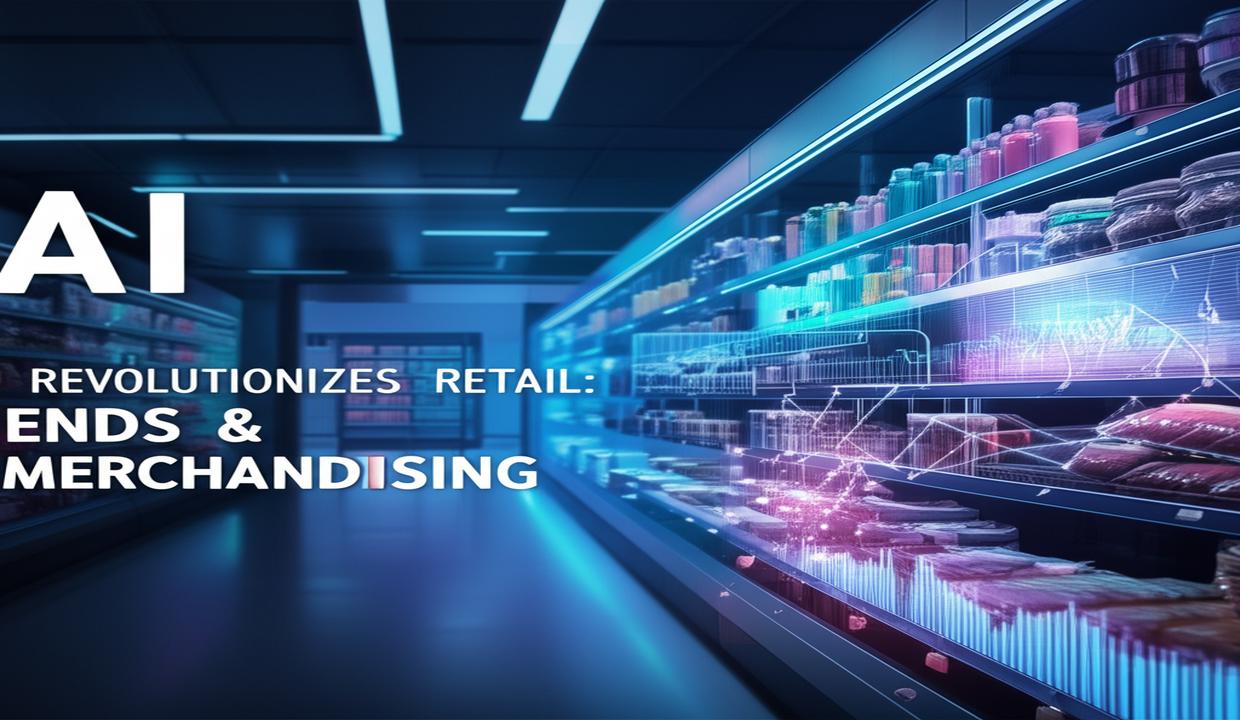
The retail landscape is undergoing a profound transformation, driven by the relentless pace of technological innovation. At the heart of this revolution is Artificial Intelligence (AI), particularly its application in visual merchandising. Gone are the days of purely manual product placements and static store layouts. Today, AI in retail offers unprecedented capabilities to predict customer preferences, optimize displays, and create engaging shopping experiences.
This article delves deep into how AI in retail merchandising is redefining visual aesthetics and operational efficiency for stores worldwide. We will explore the core technologies, recent breakthroughs, and practical applications that allow retailers to not only keep pace with but also anticipate visual merchandising trends. Prepare to discover how intelligent systems are making every shelf and display a more strategic asset.
Main Highlights: AI in Retail Merchandising: Visual Trends Prediction for Stores
At its core, AI in retail merchandising leverages sophisticated algorithms and data analysis to understand and forecast consumer behavior. It’s about moving beyond intuition to data-driven decisions that enhance the in-store and online shopping journey. This technology is becoming indispensable for retailers aiming for precision and profitability.
The primary goal is to optimize store layouts, product displays, and inventory management. By forecasting retail trend prediction and customer preferences in real-time, AI ensures that what shoppers see is exactly what they want. This leads to increased engagement, higher sales, and a significant reduction in waste.
The Brains Behind the Beauty: How AI Predicts Visual Trends
AI systems employ a suite of advanced technologies to analyze vast quantities of data. They scrutinize everything from social media trends and in-store video footage to historical sales data and intricate customer behavior patterns. This comprehensive analysis allows for highly accurate predictions of upcoming visual merchandising trends and customer demand.
The real magic lies in their ability to process information at a scale and speed impossible for humans. These systems ensure that every visual element, from product placement to promotional signage, is optimally aligned with current and emerging market desires.
Computer Vision: Seeing What Matters
Computer vision is a cornerstone of modern merchandising technology. Using advanced algorithms, including Convolutional Neural Networks (CNNs) and tools like OpenCV, AI systems can “see” and interpret images and video from inside a store. This technology allows for automated shelf audits and precise product placement verification.
It ensures planogram compliance, meaning products are displayed exactly as intended, and identifies issues like out-of-stocks or misplaced items instantly. This level of oversight significantly enhances operational efficiency and presentation consistency across all retail locations. Many retailers are using AI to automate visual merchandising with AI, leading to better results.
Machine Learning: Learning and Adapting
Underpinning the predictive capabilities are robust machine learning models. These models continuously learn from new data, identifying subtle shifts in trends, forecasting demand with remarkable accuracy, and dynamically optimizing displays as market preferences evolve. They are the analytical engines that turn raw data into actionable insights.
This dynamic adaptation is crucial in fast-paced retail environments, where trends can emerge and fade quickly. Machine learning ensures that merchandising strategies remain agile and highly responsive to consumer tastes, maximizing product appeal and sales potential.
AI Agents: The Real-Time Sentinels
AI agents represent the next frontier in merchandising technology. These sophisticated digital entities continuously collect and analyze real-time store data. They monitor foot traffic, sales performance, and customer interactions, providing an ongoing stream of insights for immediate optimization. They are the proactive eyes and ears of the store.
This continuous feedback loop allows for near-instant adjustments to merchandising strategies, from altering digital signage to reconfiguring physical displays. Such dynamic capabilities ensure that every inch of the retail space is working at its peak efficiency. Discover more about how AI agents for visual merchandising are transforming operations.
Augmented Reality (AR): Immersive Shopping Experiences
While not directly involved in trend prediction, Augmented Reality (AR) significantly enhances the application of visual merchandising insights. AR provides customers with interactive displays and virtual try-ons, bridging the gap between digital and physical shopping. This technology enhances engagement and personalization, making shopping more exciting.
Imagine virtually trying on clothes or seeing how a new furniture piece would look in your home, all within the store environment. AR enriches the customer journey, directly influencing purchasing decisions based on personalized visual experiences.
Revolutionizing the Retail Floor: Real-World AI Applications
The theoretical power of AI translates into tangible benefits and practical applications across various aspects of retail operations. These real-world use cases demonstrate how AI for stores is not just a concept but a vital tool for competitive advantage.
From ensuring shelves are always stocked to predicting the next big fashion statement, AI is making retail smarter, more efficient, and ultimately, more profitable. The immediate impact on daily operations is already transforming how businesses run.
Automated Shelf Audits: Precision and Efficiency
One of the most immediate and impactful applications is automated shelf auditing. AI-powered systems track product availability and placement with unparalleled accuracy. This cuts operational costs significantly by reducing the need for manual checks and ensures products are always on display.
By maximizing sales opportunities and minimizing out-of-stocks, retailers can ensure a seamless shopping experience. It’s a fundamental shift from reactive problem-solving to proactive inventory and display management. This is a core benefit of incorporating artificial intelligence in visual merchandising.
Data-Driven Trend Forecasting: Staying Ahead
AI excels at analyzing vast datasets from social media, search engine trends, and fashion blogs to predict emerging consumer preferences. This foresight enables retailers to design product assortments that are perfectly aligned with current and future customer desires.
It moves merchandising from a seasonal guesswork to a science, ensuring that stores stock what customers want before they even realize they want it. This predictive capability is a significant competitive edge in a trend-driven market.
Optimized Store Layouts: Guiding the Customer Journey
AI can analyze customer movement patterns within a store, identifying popular zones, bottlenecks, and unexplored areas. This data guides the optimization of store layouts to maximize shopper engagement and revenue. It’s about creating a flow that naturally draws customers to high-value items.
Strategic placement of products and displays, informed by AI, can significantly influence purchasing paths and impulse buys. This intelligent design transforms the store into a highly effective sales environment.
Dynamic Pricing Adjustments: Maximizing Profitability
While primarily a sales strategy, dynamic pricing heavily relies on the same real-time inventory and competitor data used in visual merchandising. AI continuously monitors these factors, adjusting prices to maximize profitability and minimize waste.
This ensures that products are always priced competitively, reflecting demand and stock levels, without requiring constant manual oversight. It’s an agile approach that responds instantly to market shifts, driving better financial outcomes.
Unveiling Breakthroughs: What’s New in 2025 AI Merchandising
The evolution of merchandising technology is relentless, with new breakthroughs constantly pushing the boundaries of what’s possible. 2025 is seeing several innovative applications that are set to redefine retail operations, making them even smarter and more efficient.
These advancements reflect a growing maturity in AI applications, moving beyond basic automation to truly intelligent and integrated systems. Retailers adopting these technologies are positioning themselves at the forefront of the industry.
Digital Twins: Virtual Merchandising Playgrounds
The concept of digital twins is revolutionizing product merchandising. This technology allows retailers to create virtual replicas of their stores and products, experimenting with display concepts and getting feedback virtually. Brands like Coach are already leveraging this to test new layouts and product placements before deploying them physically.
This virtual testing saves significant time and resources, reducing risk and ensuring that physical implementations are optimized from the start. It’s a game-changer for iterative design and rapid prototyping in visual merchandising.
AI-Powered Robots: The Automated Workforce
The integration of AI-powered robots into retail operations is another significant leap. Robots like Simbe’s Tally 3.0 are now performing automated shelf scanning and inventory management. These robots improve stock accuracy dramatically and significantly reduce out-of-stock losses.
They free up human employees for more customer-facing tasks, enhancing both operational efficiency and service quality. It’s a powerful example of how robotics and AI are collaborating to streamline complex retail processes.
Hyper-Personalized Online Merchandising: Tailored Experiences
AI-driven hyper-personalization is transforming online retail by replicating the personalized in-store experience at scale. Walmart’s use of generative AI to customize its e-commerce homepage for every individual shopper is a prime example. This ensures that each customer sees products and promotions most relevant to them.
This level of personalization not only enhances the online shopping journey but also drives higher conversion rates by presenting highly curated selections to each user. It’s about making every digital interaction feel uniquely tailored.
Beyond the Hype: Tangible Benefits and Business Impact
The adoption of AI retail solutions offers a plethora of benefits that extend beyond mere operational efficiency. These advantages translate directly into improved customer satisfaction, increased sales, and a healthier bottom line for retailers.
Investing in merchandising technology powered by AI is not just about staying relevant; it’s about establishing a competitive advantage that drives sustainable growth and customer loyalty in a challenging market.
- Enhanced Operational Efficiency: Automated reporting and inventory checks streamline daily tasks, freeing staff for higher-value activities.
- Improved Customer Experiences: Personalized recommendations and interactive displays create more engaging and satisfying shopping journeys.
- Increased Sales and Reduced Stock Waste: Accurate demand forecasting and timely restocking minimize lost sales and reduce overstocking.
- Time and Cost Savings: Streamlining merchandising tasks and replacing manual audits with AI automation leads to significant financial benefits.
- Better Decision-Making: Real-time data and predictive analytics empower managers with insights for smarter, faster strategic choices.
The Road Ahead: Future Potential and Current Hurdles
The future of visual merchandising trends is undeniably intertwined with the continuous advancement of AI. We are on the cusp of even deeper integration, where AI agents could enable fully dynamic merchandising that adapts to trends in near real-time, sometimes even predicting micro-trends hours in advance.
This level of agility would allow retailers to pivot their strategies almost instantly, responding to unforeseen market shifts with unprecedented speed. The potential for hyper-responsive retail environments is immense.
However, this transformative journey is not without its challenges. Retailers often face complexity when integrating new AI systems with existing legacy infrastructure. There are also significant data privacy concerns that must be meticulously addressed to maintain customer trust and comply with regulations.
Furthermore, the successful deployment of AI tools necessitates comprehensive employee training. Staff need to understand how to interact with and leverage these new technologies effectively. Pilot projects and strategic partnerships with experienced AI vendors can significantly address these hurdles, paving the way for smoother adoption and maximum benefits. Exploring solutions like visual merchandising optimization AI agents can help mitigate some of these complexities.
Pros and Cons
| Pros | Cons |
|---|---|
| Real-time trend prediction and adaptation. | High initial implementation cost and complexity. |
| Significantly enhanced operational efficiency. | Requires integration with diverse legacy systems. |
| Improved customer engagement and personalization. | Concerns regarding data privacy and security. |
| Reduced inventory waste and out-of-stock instances. | Need for significant employee training and skill development. |
| Data-driven insights replace guesswork in merchandising. | Potential for job displacement in manual auditing roles. |
| Ability to create dynamic, responsive store environments. | Reliance on high-quality, continuous data input. |
FAQ
-
What is AI in retail visual merchandising?
It’s the application of artificial intelligence, including computer vision and machine learning, to optimize store layouts, product displays, and inventory. The goal is to predict and adapt to customer visual preferences and market trends in real-time for improved sales and customer experience.
-
How does AI predict visual merchandising trends?
AI systems analyze vast datasets, including social media, sales data, customer behavior, and in-store video footage. Machine learning models then identify patterns and forecast upcoming trends, allowing retailers to adjust product assortments and display strategies proactively.
-
What are the key technologies used?
Core technologies include computer vision for analyzing images and videos (e.g., shelf audits), machine learning for trend forecasting, AI agents for real-time data collection, and Augmented Reality (AR) for interactive customer experiences like virtual try-ons.
-
Can AI really help with store layout optimization?
Absolutely. AI analyzes customer movement patterns, foot traffic, and engagement with different product categories. This data allows retailers to strategically optimize store layouts, guiding shoppers more effectively, enhancing product visibility, and maximizing revenue per square foot.
-
What are the main benefits for retailers?
Retailers gain enhanced operational efficiency through automation, improved customer experiences via personalization, increased sales from better trend alignment, and significant time and cost savings by streamlining traditional merchandising tasks. It transforms guesswork into data-driven strategy.
-
Are there any challenges to adopting AI in merchandising?
Yes, common challenges include integrating new AI systems with older legacy infrastructure, addressing complex data privacy concerns, and ensuring adequate training for employees on how to use these new tools effectively. However, these are often mitigated through pilot projects and vendor partnerships.
Conclusion
The integration of AI in retail merchandising marks a pivotal moment for the industry. From predicting nuanced visual merchandising trends to automating mundane tasks, AI is enabling retailers to be more agile, efficient, and deeply connected with their customer base. The future promises even more dynamic and personalized shopping experiences, transforming every aspect of retail operations. This is truly the era of intelligent stores, where every display tells a story informed by data.
Embracing this merchandising technology isn’t just an option; it’s a strategic imperative for any retailer aiming for sustained success and relevance in a rapidly evolving market. The blend of computer vision, machine learning, and AI agents is creating an exciting new paradigm. Explore more about AI merchandising best practices to stay ahead. To learn more about our expertise, feel free to visit our About Us page, or for specific inquiries, reach out through our Contact section. #AIRetailFuture
Watch More in This Video
For a deeper dive into how leading retailers are leveraging AI for visual merchandising, check out this insightful video. It demonstrates the practical applications of AI-powered computer vision, machine learning, and showcases specific AI agent platforms and AR solutions that are currently reshaping the industry.
Disclaimer: All images and videos are sourced from public platforms like Google and YouTube. If any content belongs to you and you want credit or removal, please inform us via our contact page.