
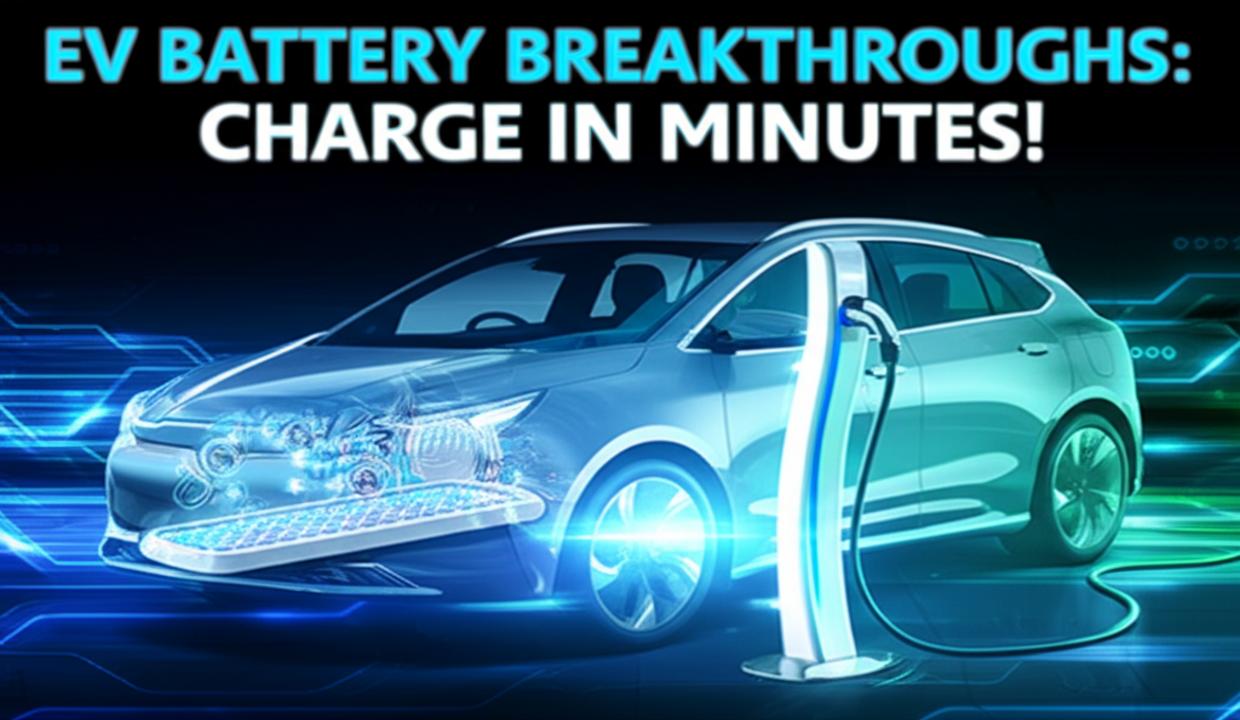
Imagine a future where charging your electric vehicle is as quick and effortless as refueling a gasoline car. This isn’t just a dream; it’s rapidly becoming a reality, thanks to groundbreaking EV battery technology. The world of electric vehicles is constantly evolving, and at the heart of this transformation are incredible lithium-ion battery innovations focused on achieving truly faster EV charging. For anyone considering an EV or already owning one, understanding these advancements is crucial. They directly impact how convenient, efficient, and practical electric transportation becomes.
This article dives deep into the cutting-edge developments that are supercharging electric vehicle batteries. We’ll explore the ingenious solutions that allow for rapid power delivery without compromising battery health or safety. From new materials to clever cooling systems, the journey to minute-long charging times is well underway. Get ready to discover the exciting future of EV charging solutions that are set to revolutionize our daily commutes and long-distance travels.
Main Highlights: EV Battery Tech Innovations: Faster Charging Lithium Solutions
The quest for faster EV charging isn’t just about pouring more power into a battery; it’s a sophisticated interplay of chemistry, engineering, and thermal management. The core principle behind these innovations is to enable lithium ions to move more freely and quickly within the battery cell, absorbing energy at an unprecedented rate, all while maintaining the battery’s integrity and extending its lifespan. This involves a holistic approach, addressing every component from the anode to the cathode, and even the surrounding environment.
Key advancements revolve around increasing the battery’s voltage, enhancing electrode materials, and revolutionizing how heat is managed during intense charging sessions. These changes work in tandem to create a robust and efficient charging ecosystem. The goal is clear: reduce the time spent tethered to a charger, making electric vehicles an even more compelling choice for everyone.
The Science Behind the Speed: How Batteries Charge Faster
The secret to significantly faster charging lies in several interconnected scientific and engineering marvels. Traditional electric vehicles often operate on 400V battery systems, but the industry is rapidly transitioning to 800V systems. This higher voltage allows for more power to be delivered to the battery cells with less current, reducing heat generation and enabling quicker charge times. Think of it like a wider pipeline for electricity.
Beyond voltage, the very composition of the battery cells is evolving. Scientists are developing advanced electrode materials, such as nickel-rich cathodes, which are crucial for enhancing energy density and allowing for rapid ion movement. These materials facilitate quicker absorption and release of lithium ions, directly translating to faster charging speeds. For deeper insights into what powers the future of energy, you can explore resources like this blog on future energy.
Groundbreaking Advances in Battery Chemistry and Architecture
One of the most anticipated breakthroughs is the advent of solid-state batteries. Unlike conventional lithium-ion batteries that use liquid electrolytes, solid-state batteries employ a solid electrolyte. This not only enhances safety by reducing the risk of thermal runaway but also promises faster charging capabilities and significantly higher energy densities. While still facing commercialization hurdles, mainstream adoption is projected around 2025, marking a pivotal shift in battery technology.
Another crucial innovation is the refinement of high-nickel cathodes. These materials are designed to reduce the reliance on more expensive and ethically challenging cobalt, while simultaneously boosting the battery’s energy density. Higher energy density means a battery can store more power in the same size, allowing for quicker charging times without compromising the vehicle’s driving range.
Looking even further ahead, chemistries like lithium-sulfur and lithium-air batteries are generating immense excitement. These next-generation technologies promise to double the energy density of current batteries, potentially doubling EV range and further slashing charging times. While still in earlier stages of development, their potential impact is enormous. Furthermore, for those interested in the broader landscape of battery innovation, various hubs are pushing boundaries across the globe.
A more immediate, sustainable alternative also gaining traction is sodium-ion batteries. By 2025, these batteries have advanced to a “second generation” stage, offering improved energy density and faster charging capabilities. Their primary advantage lies in reducing reliance on scarce and expensive lithium, promoting a more sustainable and accessible EV future. Their advancements are proving significant for the supply chain, as highlighted by recent news on battery developments.
Keeping Cool Under Pressure: Thermal Management Innovations
Fast charging generates a lot of heat, and uncontrolled heat can degrade battery life and even pose safety risks. This is where advanced thermal management becomes critical. Innovations such as immersion cooling, where battery cells are submerged in a non-conductive dielectric fluid, efficiently dissipate heat across all cells. This ensures uniform temperature distribution and allows for sustained fast charging without overheating.
Phase change materials are another fascinating development. These materials absorb and release heat as they change states (e.g., from solid to liquid), effectively regulating battery temperature during charging and discharging cycles. These sophisticated cooling systems are essential enablers of ultra-fast charging, ensuring the battery remains within optimal operating temperatures, thus enhancing safety and extending its overall lifespan.
Real-World Impact: From Lab to Road
These technological marvels aren’t confined to laboratories; they’re rapidly making their way into real-world applications. High-voltage 800V EV battery systems are no longer just a concept; they are already being integrated into several new, high-performance EV models from leading manufacturers. This integration is directly responsible for the dramatic reduction in charging times that we are beginning to see today.
Complementing these in-car innovations is the expanding infrastructure of ultra-fast chargers. These powerful charging stations, capable of replenishing an EV’s battery to 80% in under 15 minutes, are becoming increasingly common across major charging networks. This rapid deployment of infrastructure is crucial for alleviating range anxiety and making long-distance EV travel more feasible and convenient.
Furthermore, early versions of solid-state and lithium-sulfur batteries are already being piloted in specialized applications, particularly for high-performance and long-range EV models where their superior energy density and charging speeds offer a significant advantage. These pilot programs are critical steps toward their broader commercialization, showcasing their potential in demanding scenarios.
The Unveiled Benefits: Why This Matters to You
The implications of these battery innovations are profound, offering a myriad of benefits that enhance the appeal and practicality of electric vehicles for a wider audience:
- Dramatic Time Savings: The most immediate benefit is the reduction of charging times from hours to mere minutes. This makes EV ownership far more convenient, especially for those with busy lifestyles or who rely on public charging infrastructure.
- Alleviated Range Anxiety: Faster charging means less worry about finding a charger on long trips. A quick top-up during a coffee break can significantly extend your journey, making EVs more viable for travel beyond daily commutes.
- Enhanced Battery Lifespan: Contrary to popular belief, well-managed fast charging, especially with advanced thermal systems, can be less detrimental than poorly managed slow charging. These innovations are designed to protect the battery, potentially extending its overall operational life.
- Improved Safety: Technologies like solid-state electrolytes and advanced thermal management significantly reduce the risk of thermal runaway, making electric vehicle batteries inherently safer to operate and charge.
- Environmental Sustainability: Innovations like sodium-ion batteries reduce reliance on critical raw materials. Furthermore, improved raw material sourcing, direct lithium extraction methods, and advancements in recycling technologies contribute to a more sustainable and circular economy for batteries. This holistic approach makes EVs a truly environmentally friendly transportation option.
- Broader Consumer Adoption: By addressing core pain points like charging time and range anxiety, these innovations make electric vehicles a more practical, attractive, and accessible choice for the mass market, accelerating the global transition to sustainable transportation. For more on how these breakthroughs are slashing charging times and doubling driving range, check out this article from Sustainability Times.
What’s New in 2025? A Glimpse into the Near Future
As we approach 2025, the landscape of EV battery technology is bustling with promising developments. The year is poised to be a landmark for several key breakthroughs. We expect to see more widespread commercial piloting of solid-state batteries, moving closer to mass production. The “second generation” of sodium-ion batteries will also hit its stride, offering a compelling blend of improved energy density and cost-effectiveness, paving the way for more affordable EVs.
Beyond new chemistries, refinements in existing lithium-ion technology, particularly with high-nickel cathodes and advanced thermal management, will continue to push the boundaries of charging speed and battery efficiency. These continuous improvements ensure that even as new technologies emerge, current ones are still being optimized to their fullest potential. This iterative innovation is a hallmark of the dynamic battery industry, always striving for better EV charging solutions.
Navigating the Future: Potential and Current Hurdles
While the future of EV battery technology looks incredibly bright, the path to widespread adoption of these ultra-fast charging solutions isn’t without its challenges. Overcoming these hurdles is crucial for realizing the full potential of these innovations.
Solid-state and lithium-sulfur batteries, despite their immense promise, face significant commercialization challenges. Manufacturing them at scale remains complex and costly. Ensuring their longevity and durability over thousands of charge cycles also requires extensive testing and validation. The transition from lab prototypes to millions of units in cars is a monumental undertaking.
Sodium-ion batteries, while offering a sustainable and cost-effective alternative, still trail lithium-ion in terms of energy density for certain high-performance applications. Bridging this gap will be key to their broader integration into mainstream EVs. However, they are already proving viable for city cars and energy storage applications.
Furthermore, the expansion of ultra-fast charging infrastructure is paramount. Even with revolutionary batteries, their benefits cannot be fully realized without a robust network of powerful chargers. Advances in battery management systems (BMS) are also necessary to intelligently control charging processes, ensuring safety and optimizing battery health across diverse conditions.
Finally, continued innovation in cell chemistry, thermal management, and recycling technology is not just an option but a necessity. The growing global demand for EVs requires a sustainable supply chain for critical materials, reducing geopolitical risks and ensuring a truly green future for transportation. This comprehensive approach, addressing everything from raw material sourcing to end-of-life recycling, will define the success of future EV charging solutions.
Pros and Cons
| Pros of New EV Battery Tech | Cons / Challenges Remaining |
|---|---|
| Ultra-fast charging times (minutes vs. hours) | High manufacturing costs for new tech (e.g., solid-state) |
| Reduced range anxiety for consumers | Scaling production of advanced batteries (e.g., solid-state) |
| Potentially longer battery lifespan (with optimized thermal management) | Need for massive expansion of ultra-fast charging infrastructure |
| Enhanced safety features (e.g., solid-state electrolytes) | Longevity and durability testing for new battery chemistries |
| Higher energy density, leading to greater range | Energy density gap for sodium-ion batteries in some applications |
| Greater sustainability through material diversification (sodium-ion) | Reliance on critical materials and geopolitical risks |
| Accelerates mainstream EV adoption | Continued R&D needed for optimal performance and recycling |
FAQ
- Q: What is the biggest breakthrough enabling faster EV charging?
A: The shift to 800V battery systems, combined with advancements in electrode materials like high-nickel cathodes and the development of solid-state batteries, are the most significant breakthroughs. These innovations allow for more efficient power transfer and faster ion movement within the battery cells, dramatically cutting down charging times. - Q: Are faster charging batteries safe?
A: Yes, safety is a top priority. Innovations like solid-state electrolytes reduce the risk of thermal runaway, and advanced thermal management systems (e.g., immersion cooling) actively regulate battery temperature during fast charging, ensuring safety and preventing degradation. - Q: How quickly can the new EV batteries charge?
A: With current advancements and ultra-fast chargers, some EV models can charge from 10% to 80% in under 15 minutes. Future technologies like solid-state and lithium-sulfur batteries promise even quicker charge rates, potentially bringing charging times closer to that of refueling a gasoline car. - Q: Will these new batteries double my EV’s range?
A: While current innovations primarily focus on faster charging, chemistries like lithium-sulfur and lithium-air batteries inherently promise significantly higher energy densities, which could indeed lead to a doubling of EV range in the future. However, these are still in earlier stages of development. - Q: When will solid-state batteries be widely available?
A: While prototypes are being tested, mainstream commercial adoption of solid-state batteries is generally expected around 2025. Initial deployment might be in high-performance or specialized EV models before wider availability.
Watch More in This Video
For a dynamic visual overview of these exciting developments, check out this informative video. Titled “EV Battery Breakthroughs 2025: Faster Charging & New Chemistries,” it offers further insights into the commercial milestones and transformative impact of these technologies on EV charging speeds and range improvements. This visual resource complements current developments by demonstrating lab results and prototype testing of solid-state and sodium-ion EV batteries, bringing the science to life.
(Note: Please replace YOUR_VIDEO_ID_HERE with the actual YouTube video ID for “EV Battery Breakthroughs 2025: Faster Charging & New Chemistries”.)
Conclusion
The journey towards truly faster EV charging is progressing at an exhilarating pace, driven by relentless EV battery technology innovations. From the adoption of 800V architectures and advanced electrode materials to the promise of solid-state batteries and sustainable sodium-ion batteries, the future of electric vehicle batteries is brighter than ever. These breakthroughs are not merely incremental; they are fundamentally reshaping the convenience, practicality, and environmental appeal of electric transportation.
As we move forward, the continued collaboration between scientists, engineers, and infrastructure developers will be crucial. The goal of a cleaner, more efficient transportation future is within reach, and EV charging solutions are leading the charge, literally. Embrace the #future of mobility as these exciting innovations make electric vehicles an even more compelling choice for everyone. To learn more about us, visit our About Us page, or if you have questions, please feel free to Contact us.
Disclaimer: All images and videos are sourced from public platforms like Google and YouTube. If any content belongs to you and you want credit or removal, please inform us via our contact page.
Imagine a future where charging your electric vehicle is as quick and effortless as refueling a gasoline car. This isn’t just a dream; it’s rapidly becoming a reality, thanks to groundbreaking EV battery technology. The world of electric vehicles is constantly evolving, and at the heart of this transformation are incredible lithium-ion battery innovations focused on achieving truly faster EV charging. For anyone considering an EV or already owning one, understanding these advancements is crucial. They directly impact how convenient, efficient, and practical electric transportation becomes.
This article dives deep into the cutting-edge developments that are supercharging electric vehicle batteries. We’ll explore the ingenious solutions that allow for rapid power delivery without compromising battery health or safety. From new materials to clever cooling systems, the journey to minute-long charging times is well underway. Get ready to discover the exciting future of EV charging solutions that are set to revolutionize our daily commutes and long-distance travels.
Main Highlights: EV Battery Tech Innovations: Faster Charging Lithium Solutions
The quest for faster EV charging isn’t just about pouring more power into a battery; it’s a sophisticated interplay of chemistry, engineering, and thermal management. The core principle behind these innovations is to enable lithium ions to move more freely and quickly within the battery cell, absorbing energy at an unprecedented rate, all while maintaining the battery’s integrity and extending its lifespan. This involves a holistic approach, addressing every component from the anode to the cathode, and even the surrounding environment.
Key advancements revolve around increasing the battery’s voltage, enhancing electrode materials, and revolutionizing how heat is managed during intense charging sessions. These changes work in tandem to create a robust and efficient charging ecosystem. The goal is clear: reduce the time spent tethered to a charger, making electric vehicles an even more compelling choice for everyone.
The Science Behind the Speed: How Batteries Charge Faster
The secret to significantly faster charging lies in several interconnected scientific and engineering marvels. Traditional electric vehicles often operate on 400V battery systems, but the industry is rapidly transitioning to 800V systems. This higher voltage allows for more power to be delivered to the battery cells with less current, reducing heat generation and enabling quicker charge times. Think of it like a wider pipeline for electricity.
Beyond voltage, the very composition of the battery cells is evolving. Scientists are developing advanced electrode materials, such as nickel-rich cathodes, which are crucial for enhancing energy density and allowing for rapid ion movement. These materials facilitate quicker absorption and release of lithium ions, directly translating to faster charging speeds. For deeper insights into what powers the future of energy, you can explore resources like this blog on future energy.
Groundbreaking Advances in Battery Chemistry and Architecture
One of the most anticipated breakthroughs is the advent of solid-state batteries. Unlike conventional lithium-ion batteries that use liquid electrolytes, solid-state batteries employ a solid electrolyte. This not only enhances safety by reducing the risk of thermal runaway but also promises faster charging capabilities and significantly higher energy density. While still facing commercialization hurdles, mainstream adoption is projected around 2025, marking a pivotal shift in battery technology.
Another crucial innovation is the refinement of high-nickel cathodes. These materials are designed to reduce the reliance on more expensive and ethically challenging cobalt, while simultaneously boosting the battery’s energy density. Higher energy density means a battery can store more power in the same size, allowing for quicker charging times without compromising the vehicle’s driving range.
Looking even further ahead, chemistries like lithium-sulfur and lithium-air batteries are generating immense excitement. These next-generation technologies promise to double the energy density of current batteries, potentially doubling EV range and further slashing charging times. While still in earlier stages of development, their potential impact is enormous. Furthermore, for those interested in the broader landscape of battery innovation, various hubs are pushing boundaries across the globe.
A more immediate, sustainable alternative also gaining traction is sodium-ion batteries. By 2025, these batteries have advanced to a “second generation” stage, offering improved energy density and faster charging capabilities. Their primary advantage lies in reducing reliance on scarce and expensive lithium, promoting a more sustainable and accessible EV future. Their advancements are proving significant for the supply chain, as highlighted by recent news on battery developments.
Keeping Cool Under Pressure: Thermal Management Innovations
Fast charging generates a lot of heat, and uncontrolled heat can degrade battery life and even pose safety risks. This is where advanced thermal management becomes critical. Innovations such as immersion cooling, where battery cells are submerged in a non-conductive dielectric fluid, efficiently dissipate heat across all cells. This ensures uniform temperature distribution and allows for sustained fast charging without overheating.
Phase change materials are another fascinating development. These materials absorb and release heat as they change states (e.g., from solid to liquid), effectively regulating battery temperature during charging and discharging cycles. These sophisticated cooling systems are essential enablers of ultra-fast charging, ensuring the battery remains within optimal operating temperatures, thus enhancing safety and extending its overall lifespan.
Real-World Impact: From Lab to Road
These technological marvels aren’t confined to laboratories; they’re rapidly making their way into real-world applications. High-voltage 800V EV battery systems are no longer just a concept; they are already being integrated into several new, high-performance EV models from leading manufacturers. This integration is directly responsible for the dramatic reduction in charging times that we are beginning to see today.
Complementing these in-car innovations is the expanding infrastructure of ultra-fast chargers. These powerful charging stations, capable of replenishing an EV’s battery to 80% in under 15 minutes, are becoming increasingly common across major charging networks. This rapid deployment of infrastructure is crucial for alleviating range anxiety and making long-distance EV travel more feasible and convenient.
Furthermore, early versions of solid-state and lithium-sulfur batteries are already being piloted in specialized applications, particularly for high-performance and long-range EV models where their superior energy density and charging speeds offer a significant advantage. These pilot programs are critical steps toward their broader commercialization, showcasing their potential in demanding scenarios.
The Unveiled Benefits: Why This Matters to You
The implications of these battery innovations are profound, offering a myriad of benefits that enhance the appeal and practicality of electric vehicles for a wider audience:
- Dramatic Time Savings: The most immediate benefit is the reduction of charging times from hours to mere minutes. This makes EV ownership far more convenient, especially for those with busy lifestyles or who rely on public charging infrastructure.
- Alleviated Range Anxiety: Faster charging means less worry about finding a charger on long trips. A quick top-up during a coffee break can significantly extend your journey, making EVs more viable for travel beyond daily commutes.
- Enhanced Battery Lifespan: Contrary to popular belief, well-managed fast charging, especially with advanced thermal systems, can be less detrimental than poorly managed slow charging. These innovations are designed to protect the battery, potentially extending its overall operational life.
- Improved Safety: Technologies like solid-state electrolytes and advanced thermal management significantly reduce the risk of thermal runaway, making electric vehicle batteries inherently safer to operate and charge.
- Environmental Sustainability: Innovations like sodium-ion batteries reduce reliance on critical raw materials. Furthermore, improved raw material sourcing, direct lithium extraction methods, and advancements in recycling technologies contribute to a more sustainable and circular economy for batteries. This holistic approach makes EVs a truly environmentally friendly transportation option.
- Broader Consumer Adoption: By addressing core pain points like charging time and range anxiety, these innovations make electric vehicles a more practical, attractive, and accessible choice for the mass market, accelerating the global transition to sustainable transportation. For more on how these breakthroughs are slashing charging times and doubling driving range, check out this article from Sustainability Times.
What’s New in 2025? A Glimpse into the Near Future
As we approach 2025, the landscape of EV battery technology is bustling with promising developments. The year is poised to be a landmark for several key breakthroughs. We expect to see more widespread commercial piloting of solid-state batteries, moving closer to mass production. The “second generation” of sodium-ion batteries will also hit its stride, offering a compelling blend of improved energy density and cost-effectiveness, paving the way for more affordable EVs.
Beyond new chemistries, refinements in existing lithium-ion technology, particularly with high-nickel cathodes and advanced thermal management, will continue to push the boundaries of charging speed and battery efficiency. These continuous improvements ensure that even as new technologies emerge, current ones are still being optimized to their fullest potential. This iterative innovation is a hallmark of the dynamic battery industry, always striving for better EV charging solutions.
Navigating the Future: Potential and Current Hurdles
While the future of EV battery technology looks incredibly bright, the path to widespread adoption of these ultra-fast charging solutions isn’t without its challenges. Overcoming these hurdles is crucial for realizing the full potential of these innovations.
Solid-state and lithium-sulfur batteries, despite their immense promise, face significant commercialization challenges. Manufacturing them at scale remains complex and costly. Ensuring their longevity and durability over thousands of charge cycles also requires extensive testing and validation. The transition from lab prototypes to millions of units in cars is a monumental undertaking.
Sodium-ion batteries, while offering a sustainable and cost-effective alternative, still trail lithium-ion in terms of energy density for certain high-performance applications. Bridging this gap will be key to their broader integration into mainstream EVs. However, they are already proving viable for city cars and energy storage applications.
Furthermore, the expansion of ultra-fast charging infrastructure is paramount. Even with revolutionary batteries, their benefits cannot be fully realized without a robust network of powerful chargers. Advances in battery management systems (BMS) are also necessary to intelligently control charging processes, ensuring safety and optimizing battery health across diverse conditions.
Finally, continued innovation in cell chemistry, thermal management, and recycling technology is not just an option but a necessity. The growing global demand for EVs requires a sustainable supply chain for critical materials, reducing geopolitical risks and ensuring a truly green future for transportation. This comprehensive approach, addressing everything from raw material sourcing to end-of-life recycling, will define the success of future EV charging solutions.
Pros and Cons
| Pros of New EV Battery Tech | Cons / Challenges Remaining |
|---|---|
| Ultra-fast charging times (minutes vs. hours) | High manufacturing costs for new tech (e.g., solid-state) |
| Reduced range anxiety for consumers | Scaling production of advanced batteries (e.g., solid-state) |
| Potentially longer battery lifespan (with optimized thermal management) | Need for massive expansion of ultra-fast charging infrastructure |
| Enhanced safety features (e.g., solid-state electrolytes) | Longevity and durability testing for new battery chemistries |
| Higher energy density, leading to greater range | Energy density gap for sodium-ion batteries in some applications |
| Greater sustainability through material diversification (sodium-ion) | Reliance on critical materials and geopolitical risks |
| Accelerates mainstream EV adoption | Continued R&D needed for optimal performance and recycling |
FAQ
- Q: What is the biggest breakthrough enabling faster EV charging?
A: The shift to 800V battery systems, combined with advancements in electrode materials like high-nickel cathodes and the development of solid-state batteries, are the most significant breakthroughs. These innovations allow for more efficient power transfer and faster ion movement within the battery cells, dramatically cutting down charging times. - Q: Are faster charging batteries safe?
A: Yes, safety is a top priority. Innovations like solid-state electrolytes reduce the risk of thermal runaway, and advanced thermal management systems (e.g., immersion cooling) actively regulate battery temperature during fast charging, ensuring safety and preventing degradation. - Q: How quickly can the new EV batteries charge?
A: With current advancements and ultra-fast chargers, some EV models can charge from 10% to 80% in under 15 minutes. Future technologies like solid-state and lithium-sulfur batteries promise even quicker charge rates, potentially bringing charging times closer to that of refueling a gasoline car. - Q: Will these new batteries double my EV’s range?
A: While current innovations primarily focus on faster charging, chemistries like lithium-sulfur and lithium-air batteries inherently promise significantly higher energy densities, which could indeed lead to a doubling of EV range in the future. However, these are still in earlier stages of development. - Q: When will solid-state batteries be widely available?
A: While prototypes are being tested, mainstream commercial adoption of solid-state batteries is generally expected around 2025. Initial deployment might be in high-performance or specialized EV models before wider availability.
Watch More in This Video
For a dynamic visual overview of these exciting developments, check out this informative video. Titled “EV Battery Breakthroughs 2025: Faster Charging & New Chemistries,” it offers further insights into the commercial milestones and transformative impact of these technologies on EV charging speeds and range improvements. This visual resource complements current developments by demonstrating lab results and prototype testing of solid-state and sodium-ion EV batteries, bringing the science to life.
Conclusion
The journey towards truly faster EV charging is progressing at an exhilarating pace, driven by relentless EV battery technology innovations. From the adoption of 800V architectures and advanced electrode materials to the promise of solid-state batteries and sustainable sodium-ion batteries, the future of electric vehicle batteries is brighter than ever. These breakthroughs are not merely incremental; they are fundamentally reshaping the convenience, practicality, and environmental appeal of electric transportation.
As we move forward, the continued collaboration between scientists, engineers, and infrastructure developers will be crucial. The goal of a cleaner, more efficient transportation future is within reach, and EV charging solutions are leading the charge, literally. Embrace the #future of mobility as these exciting innovations make electric vehicles an even more compelling choice for everyone. To learn more about us, visit our About Us page, or if you have questions, please feel free to Contact us.
Disclaimer: All images and videos are sourced from public platforms like Google and YouTube. If any content belongs to you and you want credit or removal, please inform us via our contact page.