
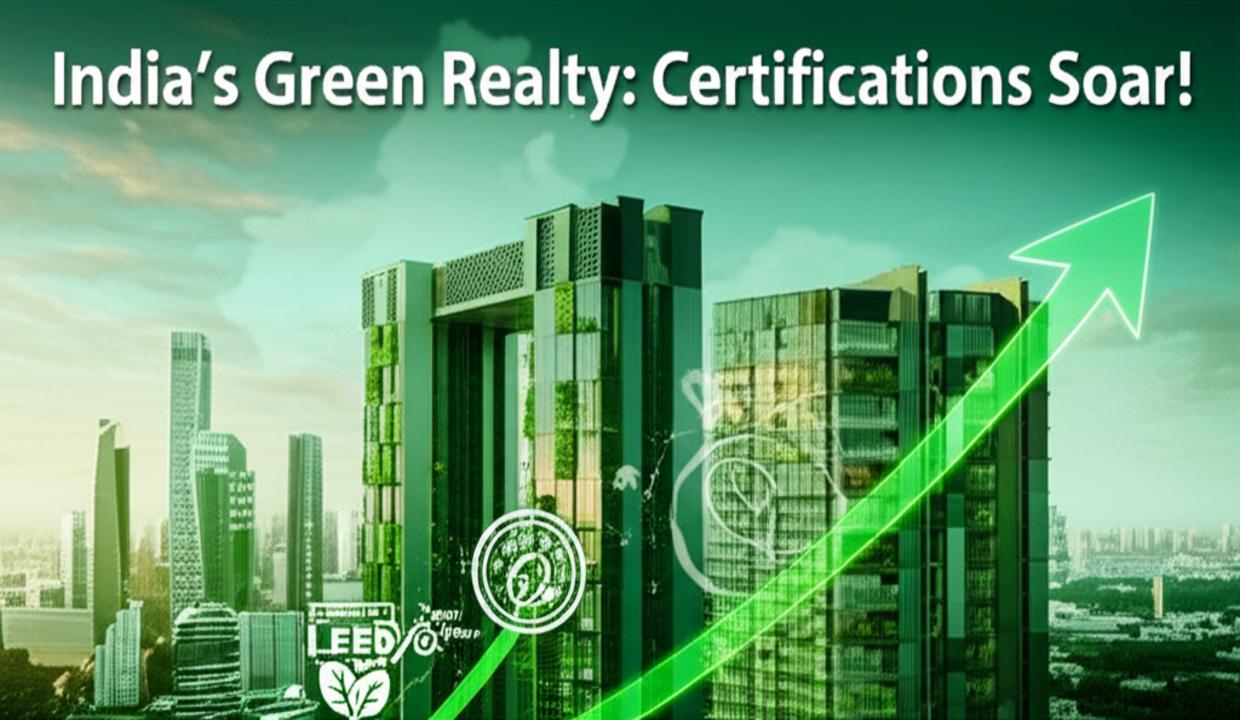
The skyline of Indian cities is undergoing a remarkable transformation, not just in height and density, but in a profound shift towards sustainability. For decades, real estate development often prioritized rapid expansion. However, a new era is dawning, characterized by a burgeoning demand for green building certifications India. This isn’t merely a trend; it’s a fundamental change in the way we conceive, construct, and inhabit spaces.
This article dives deep into the forces propelling the growth of sustainable real estate in India, exploring why certifications are becoming indispensable. We’ll uncover the driving factors, key players, benefits, and the promising outlook for eco-friendly construction, aligning with India realty trends towards a greener future.
Main Highlights: Green Building Certifications: Demand Rising in India’s Realty
The surge in demand for Green Building Certifications in India’s real estate sector is undeniable. It reflects a growing collective awareness about environmental impact, coupled with strategic governmental pushes and a discernible market preference for properties that champion sustainability. Certifications such as LEED, GRIHA, and IGBC are no longer just optional add-ons; they are becoming crucial benchmarks.
These certifications validate a project’s commitment to energy efficiency, resource conservation, and climate resilience. This paradigm shift not only elevates building value and slashes operational expenditures but also significantly boosts marketability. It’s a powerful alignment with India’s overarching goals to drastically reduce carbon emissions and foster genuinely sustainable urban development.
Why the Demand for Green Buildings is Surging in India
Several interwoven factors are fueling the rapid adoption of green building practices and certifications across India. Understanding these drivers is key to appreciating the current landscape and future trajectory of sustainable real estate development in the country.
Government Support and Incentives: The Green Catalyst
The Indian government has emerged as a formidable catalyst for green building adoption. It offers a robust framework of incentives, including subsidies, tax rebates, and low-interest loans. Furthermore, developers benefit from reduced duties on green construction materials, making sustainable choices more economically viable.
The Ministry of New and Renewable Energy actively provides financial support to projects that adhere to stringent environmental standards. These proactive measures significantly reduce the initial capital outlay for developers, thereby providing a strong impetus to pursue various green certifications. This top-down support is critical in shaping positive India realty trends.
Market Demand and Valuation: A Premium on Sustainability
Beyond government mandates, genuine market demand is propelling the green building movement. Certified green buildings increasingly attract a premium clientele, including tenants and investors who prioritize sustainability and desire future-proof housing solutions. These properties consistently command higher market values and often experience quicker sales cycles.
Today’s discerning buyers are actively seeking buildings that are not only healthier but also more energy-efficient and environmentally responsible. They understand that investing in such properties translates into long-term savings and a better quality of life. This growing consumer awareness is a powerful force for change in sustainable real estate.
The market’s increasing appreciation for eco-friendly construction is reshaping industry norms.
Popular Certification Systems in India: Setting the Standards
India’s green building ecosystem is supported by several prominent certification systems, each playing a vital role in assessing and validating environmental performance. These systems provide a structured approach for developers to demonstrate their commitment to sustainability.
- LEED (Leadership in Energy and Environmental Design): This is an internationally acclaimed rating system, widely applied across diverse sectors including residential, commercial, and industrial properties in India. It sets a global benchmark for high-performance green buildings.
- GRIHA (Green Rating for Integrated Habitat Assessment): An indigenous rating system developed by TERI (The Energy and Resources Institute) and strongly supported by the Indian government. GRIHA is uniquely tailored to India’s specific climatic conditions and sustainability challenges, offering a localized approach to green development.
- IGBC (Indian Green Building Council): A part of the CII (Confederation of Indian Industry), IGBC has developed its own suite of rating systems for various building types. It plays a pivotal role in promoting green building concepts and practices in India.
- BEE Star Rating: While not a comprehensive green building certification, the Bureau of Energy Efficiency (BEE) Star Rating system is crucial for assessing the energy efficiency of appliances and buildings. It provides a quick indicator of a building’s energy performance.
These certifications collectively help assess critical aspects such as energy and water efficiency, indoor air quality, and responsible resource utilization in eco-friendly construction projects. Understanding these various green building certifications is key to navigating the sustainable real estate market.
Growth Outlook: A Green Future for India’s Realty
The trajectory for India’s green building market is exceptionally promising. Projections indicate a robust Compound Annual Growth Rate (CAGR) of approximately 5% from 2023 to 2028. The market value recently stood at an impressive $30.24 billion, signifying a substantial and expanding sector.
Sustainability has transcended its former status as a niche or luxury offering; it has firmly entrenched itself as a defining and indispensable factor in modern real estate development. The shift is from “green buildings as a choice” to “green buildings as a necessity” for fostering responsible and resilient urban growth across the nation. This outlook reinforces positive India realty trends.
The future of real estate in India undoubtedly lies in sustainable development.
Environmental and Business Benefits: A Win-Win Proposition
The advantages of green buildings extend far beyond mere compliance, offering a compelling blend of environmental stewardship and tangible business benefits.
From an environmental perspective, these structures significantly reduce carbon footprints, contributing directly to India’s climate goals. They champion energy conservation, using less electricity and water, and often incorporate renewable energy sources. This directly addresses some of India’s most pressing environmental challenges.
For occupants, green buildings enhance health and productivity through superior indoor air quality, ample natural daylighting, and thermal comfort. This creates more pleasant and effective living and working environments. Businesses benefit from lower operational costs due to reduced utility bills, improving their bottom line.
Furthermore, certifications provide crucial regulatory validation, bolstering a developer’s corporate reputation and ensuring compliance with evolving environmental standards. This dual benefit makes green building certifications India a highly attractive proposition for all stakeholders. The significance of green certifications for the Indian real estate market cannot be overstated.
Challenges and Opportunities in Green Building Adoption
While the momentum for green buildings is strong, the path isn’t without its challenges. Initial construction costs can be perceived as higher, often due to specialized materials or technologies. A lack of widespread awareness among smaller developers or individual home builders can also be a hurdle.
However, these challenges present significant opportunities. Education campaigns can highlight the long-term operational savings that offset initial costs. Innovation in green materials and construction techniques can drive down expenses. Moreover, the increasing demand from environmentally conscious consumers creates a powerful incentive for the industry to adapt and evolve.
What’s New in 2025? Anticipating the Green Leap
As we look towards 2025, the landscape of green building certifications India is expected to evolve even further. We anticipate more stringent governmental regulations and performance benchmarks, pushing developers to adopt even higher standards of sustainability.
Technological advancements, such as AI-driven energy management systems, advanced building materials, and smart automation for resource optimization, will become more commonplace. The integration of circular economy principles, focusing on waste reduction and material recycling throughout a building’s lifecycle, will gain prominence. This shift will solidify eco-friendly construction as the norm, rather than the exception.
Pros and Cons of Green Building Certifications
| Pros | Cons |
|---|---|
| Lower operational costs (energy, water bills). | Higher upfront construction costs (often offset by long-term savings). |
| Increased property value and marketability. | Complexity and time required for certification processes. |
| Improved occupant health and productivity. | Limited availability of specialized green materials or skilled labor in some regions. |
| Positive environmental impact (reduced carbon footprint). | Perception of green buildings as a “luxury” rather than a necessity. |
| Enhanced corporate reputation and brand image. | Need for continuous monitoring and maintenance to retain green status. |
Bonus Section: The Future of Urban Living
The rise of green buildings isn’t just about structures; it’s about reshaping urban living itself. Future cities in India will likely be characterized by denser, yet healthier, green neighborhoods. Think integrated green spaces, efficient public transport, and community-centric designs that promote well-being alongside environmental responsibility.
The focus will expand beyond individual buildings to entire green townships and smart cities, where sustainability is woven into the very fabric of urban planning. This holistic approach is crucial for managing India’s rapid urbanization sustainably and effectively. The journey towards comprehensive green building certification is a vital step in this direction.
FAQ
- What are green building certifications in India?
Green building certifications are third-party validations confirming that a building meets specific environmental and sustainability standards. In India, prominent ones include LEED, GRIHA, and IGBC, which assess factors like energy efficiency, water conservation, indoor air quality, and material use.
- Why is demand for green buildings rising in India?
Demand is surging due to increasing environmental awareness, supportive government policies offering incentives, and a growing market preference for healthier, energy-efficient properties. Developers also recognize the long-term cost savings and enhanced marketability.
- What are the main benefits of owning a certified green building?
Owners benefit from lower operational costs (reduced utility bills), higher property valuation, improved occupant comfort and health, and a positive contribution to environmental conservation. It also enhances corporate image for commercial entities.
- Are green buildings more expensive to build in India?
Initially, green buildings might incur marginally higher construction costs due to specialized materials or technologies. However, these costs are often offset by significant long-term savings in energy and water consumption, leading to a better return on investment over the building’s lifespan.
Conclusion
The remarkable surge in demand for green building certifications India is a clear indicator of a profound and positive shift in the nation’s real estate sector. It underscores India’s unwavering commitment to sustainable development, driven by a powerful synergy of supportive government policies, dynamic market forces, and a growing sense of environmental responsibility among developers, investors, and occupants alike.
As sustainable real estate continues its ascent, it promises not only a greener planet but also healthier, more resilient, and economically viable urban spaces for generations to come. The future of India realty trends is undoubtedly green. We hope this deep dive has offered valuable insights into this vital transformation. Share your thoughts or explore more about About Us and sustainable practices. You can also Contact us for more information on #GreenBuilding.
Watch More in This Video
To gain further insights into this crucial topic, watch this informative video:
Note: The video titled “Green Building Certifications Growing Demand in India’s Real Estate | Sustainable Realty Trends 2025” provides additional context on government policies, certification benefits, and market trends shaping sustainable construction in India.
Disclaimer: All images and videos are sourced from public platforms like Google and YouTube. If any content belongs to you and you want credit or removal, please inform us via our contact page.