
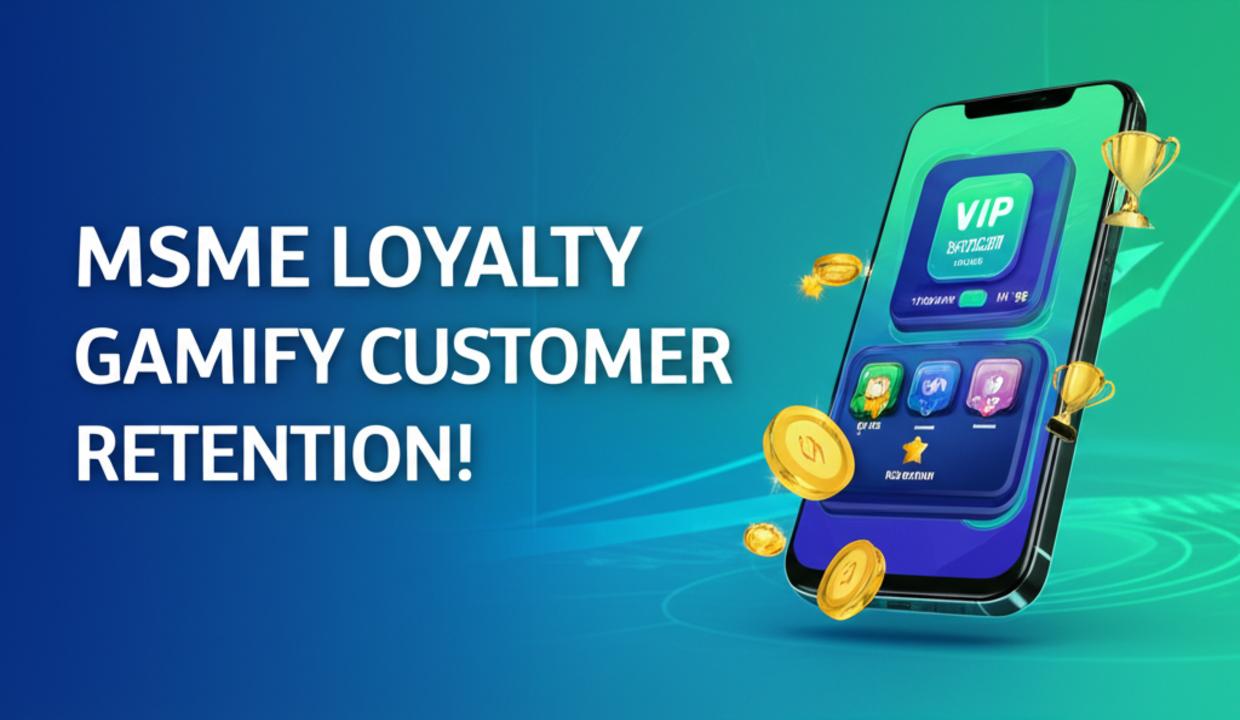
In today’s fiercely competitive market, attracting new customers is just one part of the equation. The real challenge for small to medium-sized enterprises (MSMEs) lies in keeping them coming back. Building strong, lasting customer relationships is paramount for sustainable growth. This is where MSME loyalty apps step in, especially those leveraging the power of gamification.
Imagine your customers not just purchasing, but actively participating in your brand, earning rewards, and enjoying the process. This is the promise of gamified loyalty programs. They transform mundane transactions into engaging experiences, fostering deep brand loyalty and ensuring your customers choose you, time and again.
This article will explore how gamified retention apps are revolutionizing customer loyalty for MSMEs, delving into their working principles, key features, benefits, and practical implementation tips to help your business thrive.
Main Highlights: MSME Customer Loyalty Apps: Retention via Gamified Programs
MSME customer loyalty apps are rapidly evolving, integrating game-like elements to make loyalty programs more dynamic and effective. These platforms are designed to enhance customer retention by making rewards engaging and highly personalized.
Through innovative features like points, VIP tiers, badges, and fun challenges, these apps encourage repeat purchases and consistent brand interaction. The goal is to turn transactions into an interactive journey, boosting engagement and cementing customer relationships.
Understanding the Mechanics: How Gamified Loyalty Works
Gamification in loyalty apps is more than just points; it’s about embedding game elements into the customer journey. This strategy motivates customers to engage frequently and deeply with a brand.
The core principle involves rewarding desired behaviors with tangible and intangible incentives. For instance, customers might earn points for purchases, but also for social media shares, writing reviews, or even referring a friend.
These points accumulate, often unlocking various levels or tiers. Higher tiers typically come with better rewards, exclusive discounts, or personalized benefits. This tiered approach provides ongoing motivation, as customers strive to reach the next level and unlock greater perks.
Beyond points and tiers, gamified programs incorporate badges, virtual trophies, and progress bars. These elements tap into customers’ inherent desire for recognition and achievement. When a customer earns a special badge for their 10th purchase or for celebrating their loyalty anniversary, it creates a sense of accomplishment.
This structured progression and immediate feedback make the loyalty program feel like a game, subtly encouraging more interaction and spending. It transforms a simple transaction into a rewarding adventure, making your brand more memorable and appealing.
Performance and Key Features of Gamified Loyalty Apps
The impact of gamified loyalty programs on business metrics is significant. Studies show impressive improvements across various key performance indicators.
Businesses implementing these programs have reported a remarkable 25% increase in repeat purchases. This demonstrates the direct influence of gamification on customer stickiness. Furthermore, there’s a substantial 40% rise in overall customer engagement.
This engagement isn’t just about spending; it includes interactions like opening emails, participating in surveys, or spreading positive word-of-mouth. Moreover, the average order value (AOV) often sees a healthy 15% boost, as customers are incentivized to spend more to reach higher reward tiers or unlock specific benefits.
These gains highlight how effective these apps are in driving core business growth for MSMEs.
Leading Gamified Loyalty Platforms for MSMEs
Several platforms offer robust features tailored to help MSMEs launch successful gamified loyalty programs. Each comes with unique strengths:
- Smile.io: This platform is a popular choice due to its scalability and comprehensive features. Smile.io offers customizable points systems, VIP tiers with accelerated earning rates, and powerful referral rewards. It integrates seamlessly with major eCommerce tools like Mailchimp and Klaviyo, allowing MSMEs to link their loyalty efforts directly with marketing automation campaigns. It’s ideal for businesses looking for an all-in-one solution for points, referrals, and VIP programs.
- Growave: Specifically designed for Shopify stores, Growave makes it incredibly easy to add game mechanics directly to your online storefront. Merchants can quickly implement points and tier systems, manage rewards, and track customer behavior with precision. This platform simplifies the process of integrating loyalty programs, helping to promote repeat business and gather valuable insights into customer preferences. Find out more about how gamification works in loyalty programs by checking out Growave’s insights.
- Loyalife: Offering a flexible loyalty business management system, Loyalife has demonstrated remarkable success in diverse retail environments. A leading Riyadh retail chain, for instance, used Loyalife to support omnichannel points earning and redemption. Customers could earn and redeem points via a mobile app or in-store, benefiting from personalized promotions and targeted incentives. This resulted in over 40,000 new app downloads and a phenomenal 133% user growth in just one year, showcasing its power in driving engagement. Explore more loyalty program examples.
These platforms provide the backbone for building engaging customer experiences, allowing MSMEs to compete effectively with larger enterprises by fostering deep-seated loyalty.
Crafting Engaging Experiences: Design Principles for Gamified Loyalty
The success of a gamified loyalty program hinges on its design. It needs to be intuitive, rewarding, and genuinely enjoyable for the customer. A well-designed program balances easy-to-understand point systems with layered rewards.
Think beyond just discounts. Incorporate elements like badges, trophies, and progress bars that appeal to customers’ desire for recognition and achievement. These intangible rewards can be just as powerful as monetary ones.
Providing diverse ways to earn points is crucial. While purchases are central, consider rewarding social media engagement, completing profile information, referring friends, or even celebrating birthdays. This variety adds value for customers and simultaneously helps MSMEs gather richer customer data.
The program should feel natural and integrated into the customer journey, not like a forced addition. Personalization is key; using customer data to offer tailored challenges or rewards can significantly boost participation and perceived value.
Seamless Integration: The Technology Behind Loyalty Apps
Implementing a gamified loyalty program requires careful consideration of its technological backbone. Strategic planning is crucial to align the program with your overarching business goals and to ensure it can adapt to evolving customer preferences. The technology should enhance, not hinder, the customer experience.
Seamless technological integration with existing eCommerce platforms, CRM systems, and marketing automation tools is vital. This ensures a consistent customer experience across all touchpoints and allows for accurate tracking of customer behavior and engagement. For example, linking your loyalty app to your online store means points are automatically awarded on purchase, and redeemed rewards are applied instantly.
When selecting a platform, consider its compatibility with your current infrastructure. Robust APIs and pre-built integrations can save significant development time and cost. The chosen technology should also provide comprehensive analytics, allowing MSMEs to track program performance, identify popular rewards, and understand customer segments better.
Pricing and complexity are significant factors for MSMEs. While some platforms like Smile.io can start around $49/month for basic features, costs can escalate with advanced functionalities or higher customer volumes. MSMEs must assess their budget and technical capacity to choose a solution that offers the right balance of features, ease of use, and affordability.
What’s New in 2025? Trends in Gamified Customer Loyalty
As we move into 2025, the landscape of customer loyalty programs is continuously evolving, with gamification at its forefront. The emphasis is shifting towards even deeper personalization and experiential rewards, moving beyond mere discounts.
Expect to see more AI-driven recommendations for challenges and rewards, adapting in real-time to individual customer behavior. The integration with omnichannel experiences will become even smoother, allowing customers to earn and redeem points seamlessly across online stores, physical locations, and even social media platforms. The focus will be on creating unified, immersive brand experiences.
Data privacy and transparency will also be key considerations, as customers become more aware of how their data is used. Loyalty programs will need to clearly articulate the value exchange, ensuring customers feel in control while benefiting from personalized interactions. Gamified loyalty is no longer a niche, but a standard for businesses aiming for strong, enduring customer relationships.
Pricing and Scalability for MSMEs
For MSMEs, budget is always a critical factor when adopting new technologies. Gamified loyalty apps offer a range of pricing models, from free tiers with limited features to enterprise-level solutions.
Many popular platforms, such as Smile.io, offer tiered pricing based on features, number of active customers, or monthly order volume. A basic plan might start at around $49 per month, suitable for smaller businesses just beginning their loyalty journey.
As a business grows, these platforms typically offer more advanced plans that unlock features like VIP tiers, advanced analytics, custom branding, and dedicated support. While the initial cost might seem like an investment, the return on investment through increased customer retention and average order value often far outweighs the expenditure.
Scalability is also important. Ensure the chosen platform can grow with your business, supporting increased customer numbers and more complex loyalty strategies without requiring a complete system overhaul. Look for solutions that allow for flexible customization as your needs evolve.
Pros and Cons of Gamified MSME Loyalty Apps
| Pros | Cons |
|---|---|
| Significantly boosts customer engagement and interaction. | Initial setup and strategic planning can be complex. |
| Drives higher repeat purchases and average order value. | Monthly subscription costs can accumulate for advanced features. |
| Creates a fun, memorable, and interactive brand experience. | Requires continuous monitoring and adaptation to stay relevant. |
| Enhances brand loyalty and emotional connection. | Integration with existing systems might require technical expertise. |
| Provides valuable customer data for personalized marketing. | Poorly designed programs can feel forced or unrewarding. |
| Offers diverse ways for customers to earn rewards beyond purchases. | Some platforms might have a steep learning curve for non-tech-savvy users. |
Bonus Section
Comparison Table: Leading Gamified Loyalty Platforms
| Platform | Key Features | Targeted Use | Integration Focus |
|---|---|---|---|
| Smile.io | Points, VIP tiers, Referral rewards, Analytics | Scalable loyalty programs for various MSMEs | Mailchimp, Klaviyo, general eCommerce |
| Growave | Points, Tiers, Reviews, Wishlists, Photo reviews | Specifically for Shopify stores | Deep Shopify integration |
| Loyalife | Omnichannel points, Personalized promotions, Targeted incentives, Business management | Flexible, enterprise-level features for growing MSMEs | Omnichannel (mobile app, in-store), varied POS systems |
Competitive Analysis: Gamified vs. Traditional Loyalty
Traditional loyalty programs often rely solely on “spend X, get Y discount.” While effective to a degree, they lack the dynamic engagement of gamified approaches. Gamified loyalty transcends mere transactions by building a narrative around customer interaction.
Instead of just a discount, customers earn badges, unlock exclusive tiers, and compete in challenges. This competitive and achievement-oriented aspect fosters a deeper emotional connection, making the brand experience more sticky and enjoyable. It transforms loyalty from a simple calculation into an ongoing relationship.
The diversified earning opportunities in gamified programs also stand out. Customers can earn points for actions beyond purchases, such as referring friends, leaving reviews, or even social media engagement. This provides valuable first-party data for the MSME, which is often missed in traditional setups.
Overall, gamified programs lead to higher engagement and a more sustainable long-term loyalty compared to their more passive, discount-focused counterparts. They leverage psychological triggers to drive behavior more effectively.
Expert Opinions: Strategic Implementation is Key
According to experts, the true power of gamified loyalty lies in strategic planning and continuous adaptation. Simply adding points won’t guarantee success; the gamification must align with your brand’s identity and resonate with your target audience’s preferences.
As highlighted by sources, “Careful strategic planning is crucial to align the gamified program with business goals and adapt to customer preferences over time, ensuring the gamification feels natural rather than forced.” This emphasizes that a successful program isn’t a static entity but a living system that evolves with customer feedback and market trends. #CustomerLoyalty
Successful retail examples like H&M Customer Rewards and The North Face demonstrate this principle. H&M offers a textured gamified experience with points, birthday treats, and early access, while The North Face incorporates competitions and brand-aligned events. Both foster stickiness through engaging and authentic experiences that go beyond transactional rewards. This expert consensus points to the need for thoughtful design and ongoing optimization.
FAQ
-
What is a gamified loyalty app for MSMEs?
A gamified loyalty app for MSMEs uses game-like elements such as points, VIP tiers, badges, and challenges to make customer loyalty programs more engaging and interactive. Its primary goal is to encourage repeat purchases and foster stronger brand loyalty by turning customer interactions into fun, rewarding experiences.
-
How do gamified programs benefit small businesses?
Gamified loyalty programs significantly benefit small businesses by increasing customer engagement, boosting repeat purchases (up to 25%), and raising average order values (up to 15%). They also help in collecting valuable customer data and differentiating the business from competitors by offering a unique, interactive customer experience.
-
Are gamified loyalty apps expensive for MSMEs?
The cost of gamified loyalty apps for MSMEs varies widely. Some platforms offer free basic plans, while more feature-rich options can range from $49/month upwards. MSMEs should evaluate their specific needs, customer base size, and budget to find a solution that offers the best value and scalability for their growth.
-
What features should I look for in an MSME loyalty app?
Look for features like customizable points and tier systems, referral programs, integrations with your existing eCommerce and marketing tools (e.g., Shopify, Mailchimp), analytics dashboards, and mobile app support. Omnichannel capabilities for earning and redeeming points are also a big plus for seamless customer experience.
-
Can gamified loyalty apps be integrated with existing systems?
Yes, most modern gamified loyalty apps are designed to integrate seamlessly with popular eCommerce platforms (like Shopify), CRM systems, and marketing automation tools. This integration ensures a smooth customer experience, accurate data tracking, and efficient management of loyalty rewards and communication.
Conclusion
For MSMEs seeking to cultivate lasting customer relationships and drive sustainable growth, integrating gamified retention apps is no longer just an option—it’s a strategic imperative. These innovative platforms transform the traditional loyalty model into an interactive, rewarding journey, making customers feel valued and engaged.
By leveraging points, tiers, badges, and personalized challenges, businesses can significantly boost repeat purchases, enhance customer engagement, and increase average order values. The key lies in strategic planning, choosing the right platform that integrates seamlessly with your existing tools, and continuously adapting the program to meet evolving customer preferences.
Embrace the power of play to build an unshakeable foundation of customer loyalty for your business. To learn more about how gamification is shaping the future of customer engagement, feel free to contact us or explore other articles on our site. You can also learn more About Us.
Watch More in This Video
Note: Please replace YOUR_YOUTUBE_VIDEO_ID with the actual video ID from “How Gamification is Changing Customer Loyalty Programs in 2025” for the iframe to work correctly.
Disclaimer: All images and videos are sourced from public platforms like Google and YouTube. If any content belongs to you and you want credit or removal, please inform us via our contact page.