
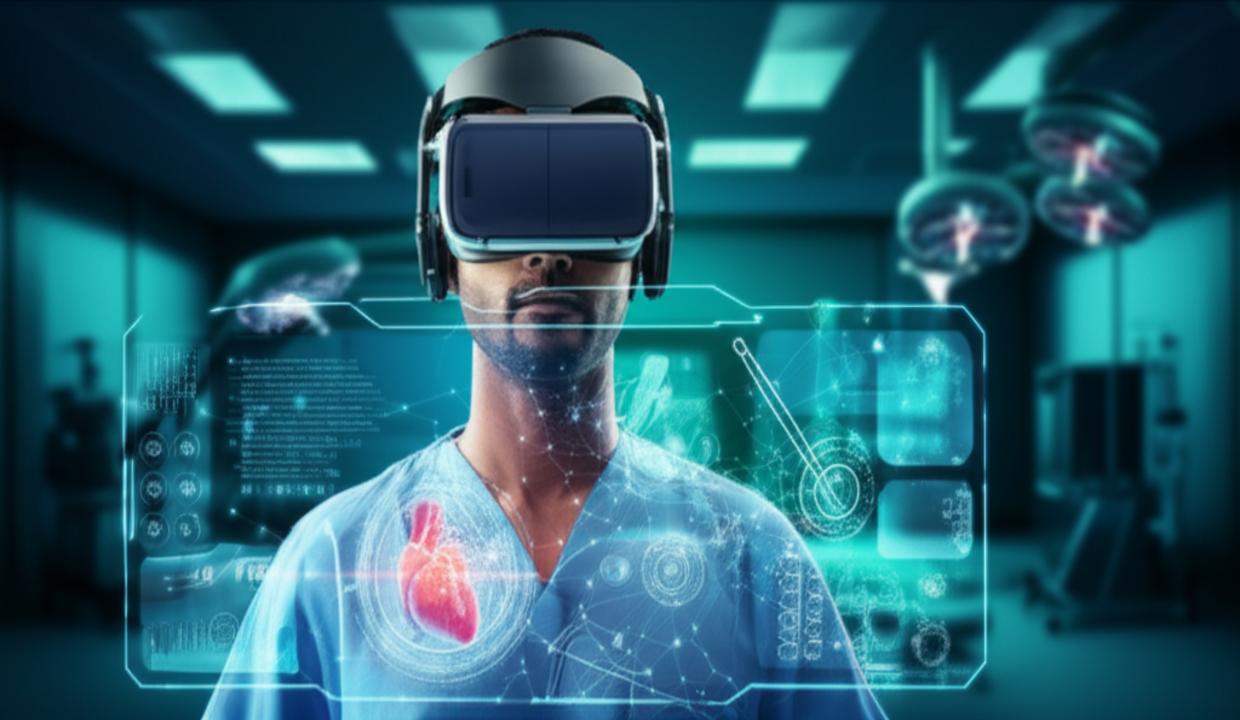
The landscape of medical education is undergoing a profound transformation, particularly in a rapidly advancing nation like India. Traditional methods of surgical training, often reliant on apprenticeship models and limited practical exposure, are steadily being supplemented, and in some cases, revolutionized, by cutting-edge innovations. Among these, virtual reality surgical training stands out as a pioneering force, fundamentally reshaping how future surgeons acquire critical skills. This article delves deep into the burgeoning role of VR in medical training across India, exploring its technology, benefits, recent advancements, and the promising future it heralds for HealthTech India.
Imagine a world where a budding surgeon can practice complex procedures repeatedly, make mistakes without consequences, and refine their technique until perfection, all within a safe, simulated environment. This is the promise of virtual reality surgical training. It’s not just a technological gimmick; it’s a strategic move to enhance competence, boost confidence, and ultimately, improve patient outcomes in a significant way.
Revolutionizing Medical Education: VR Surgical Training in India
India, with its vast population and growing healthcare needs, is uniquely positioned to benefit from the adoption of immersive technologies in medical education. The traditional “see one, do one, teach one” model, while foundational, often lacks the structured, repeatable, and feedback-rich environment necessary for mastering intricate surgical skills. This is where VR medical training India steps in, offering a robust alternative.
Recent research from Indian teaching hospitals powerfully illustrates this shift. Studies have shown that structured VR simulation-based training significantly elevates proficiency in challenging laparoscopic procedures. Think of common surgeries like appendicectomy and cholecystectomy – areas where precision is paramount. Compared to conventional apprenticeship models, VR training clearly leads to enhanced skill acquisition, providing tangible evidence of its efficacy.
The integration of advanced technology into healthcare education is a hallmark of true HealthTech India innovation. It ensures that medical professionals are not just theoretically sound but also practically adept, ready to face the complexities of real-world surgical scenarios. This systematic approach to skill development is crucial for elevating the overall standard of healthcare delivery.
The Core of Immersion: How Virtual Reality Surgical Training Works
At its heart, virtual reality surgical training leverages powerful computing to create an immersive, interactive 3D simulation environment. Trainees don VR headsets, stepping into a meticulously crafted virtual operating theatre. Within this digital space, they perform realistic surgical tasks, from precise camera navigation to intricate dissection and delicate suturing, all on virtual anatomical models.
A crucial component that elevates the realism is haptic feedback. This technology simulates tactile sensations, allowing trainees to “feel” the resistance of tissues, the tension of sutures, and the texture of organs, mimicking the sensory experience of actual surgery. Combined with high-fidelity visuals, this creates a deeply engaging and effective learning experience, all without any risk to patients.
The evolution doesn’t stop there. Mixed Reality (MR), which seamlessly blends virtual elements with the real environment, is also emerging. MR offers even more contextual training, allowing for applications like preoperative planning where virtual organs can be overlaid onto a patient’s scans, providing surgeons with an unprecedented understanding before incisions are even made. This convergence of technologies marks a new frontier in surgical simulation VR.
Understanding the working principle behind these advanced simulations highlights why they are so effective. They provide a controlled, repeatable environment where learning is active and immediate feedback is constant. This iterative process of practice and refinement is a cornerstone of true mastery in any skilled profession, especially surgery. For more detailed insights into the mechanics, consider reading this article on virtual reality in surgical training.
Performance and Key Benefits of VR Surgical Training
The advantages of incorporating virtual reality surgical training into medical curricula are manifold, extending beyond mere novelty. These benefits directly translate into enhanced surgical competence and, ultimately, improved patient safety and outcomes. The impact is significant and measurable, making VR an indispensable tool in modern medical education.
- Reduced Operation Times and Errors: Practice makes perfect, and VR allows for countless repetitions. This leads to greater precision, fewer mistakes, and consequently, shorter surgical durations in real-world scenarios.
- Safe, Repeatable Practice with Real-Time Feedback: Unlike live surgery, VR offers a zero-risk environment. Trainees can experiment, fail, learn from their mistakes, and repeat procedures until proficiency is achieved, all while receiving immediate, objective feedback on their performance. This significantly boosts decision-making skills and confidence without any patient endangerment.
- Standardized Exposure to Rare or Complex Procedures: In traditional settings, exposure to rare or highly complex cases can be infrequent and dependent on caseloads. Surgical simulation VR provides standardized access to these procedures, ensuring every trainee gains vital experience regardless of their clinical rotation.
- Facilitates Remote Access to Surgical Education: For a geographically vast and diverse country like India, with uneven distribution of advanced training resources, VR offers a groundbreaking solution. Remote access to high-quality surgical education can bridge gaps, democratizing learning opportunities for medical professionals across different regions. This is a critical aspect of VR medical training India.
These benefits collectively underscore why VR is not just a supplement but a transformative core component of surgical education. It provides a level of structured, intensive, and risk-free training that traditional methods simply cannot match. The ability to enhance proficiency while simultaneously reducing operational risks positions VR as a cornerstone of future healthcare excellence.
What’s New in 2025? Recent Developments in Indian HealthTech
The year 2025 marks a pivotal period for HealthTech India, particularly in the realm of immersive medical education. The pace of innovation and adoption of virtual reality surgical training solutions is accelerating, with several significant milestones being achieved across the nation. These developments highlight India’s commitment to integrating advanced technologies into its medical infrastructure.
One of the most notable recent developments is the inauguration of a pioneering VR nursing training lab in Ahmedabad, Gujarat. This facility is a testament to India’s holistic approach to immersive learning, extending beyond just surgical procedures to encompass broader clinical skills essential for nursing professionals. The curricula offered at this lab are meticulously aligned with international standards from the Medical Councils of India, the UK, and the USA, ensuring world-class training. This is a critical step in enhancing both clinical and surgical skills across various healthcare disciplines. You can read more about this groundbreaking initiative on India’s first VR nurse training lab.
Furthermore, the impact of VR simulation programs is being rigorously validated through extensive research within India. Multi-center randomized controlled studies conducted in 2025 have provided compelling evidence. These studies unequivocally demonstrate that VR simulation programs significantly improve the procedural confidence and operative skills of junior surgeons when compared to conventional training methodologies. This empirical validation solidifies VR’s position as an effective and essential tool in modern surgical education.
These recent strides emphasize that VR medical training India is not just theoretical; it’s being actively implemented, tested, and proven effective in real-world educational settings. The focus is on creating tangible improvements in skill acquisition and confidence, paving the way for a new generation of highly competent medical professionals. The collaborative efforts between technology developers and medical institutions are key drivers of this rapid progress, showcasing a dynamic innovation ecosystem.
Future Potential and Challenges for VR Surgical Training
The journey of virtual reality surgical training in India, while promising, also navigates a path filled with both exciting potential and inherent challenges. The future holds immense possibilities for further integration and sophistication, yet widespread adoption requires addressing key hurdles. Understanding these aspects is crucial for charting the trajectory of HealthTech India.
The integration of VR with other immersive technologies like Mixed Reality (MR) and Augmented Reality (AR) represents the next frontier. This convergence could dramatically enhance realism, offering not only advanced training but also providing intraoperative assistance. Imagine a surgeon viewing critical patient data or virtual anatomical overlays directly within their field of vision during a live procedure – this is the transformative potential of such integration. For a deeper dive into these emerging technologies, check out this article on virtual reality and its future applications.
However, significant challenges remain. Affordability is a major concern in a diverse economic landscape like India. High upfront costs for VR hardware and software can be prohibitive for many medical institutes. Scalability is another hurdle; ensuring these advanced training modules can be deployed effectively across hundreds of medical colleges and hospitals nationwide requires robust infrastructure and strategic planning. Furthermore, widespread curriculum adoption necessitates overcoming traditional mindsets and integrating VR seamlessly into existing educational frameworks. Another pertinent discussion about the future of AR and MR can be found here: Mixed Reality (MR) and Augmented Reality (AR).
While emerging evidence strongly supports the efficacy of surgical simulation VR, there’s a continued need for long-term outcome data. Researchers are actively studying the sustained impact of VR training on surgical performance and patient outcomes over extended periods. Additionally, establishing clear ethical guidelines for widespread VR adoption in surgical education is crucial to ensure responsible implementation and maintain the integrity of medical training.
These discussions are vital as India strives to leverage technology for educational advancement while ensuring equitable access and high standards. The collaborative efforts of technologists, educators, and policymakers will determine how smoothly these innovations are integrated into the fabric of Indian medical education.
Pros and Cons of VR Surgical Training in India
| Pros | Cons |
|---|---|
| Risk-free environment for skill acquisition and error correction. | High initial cost for hardware, software, and development. |
| Ability to repeat complex procedures endlessly for mastery. | Requires specialized technical expertise for setup and maintenance. |
| Provides objective, real-time feedback on performance metrics. | Potential for motion sickness or discomfort in some users. |
| Standardizes training for rare or critical surgical cases. | Lacks the full tactile and nuanced sensory input of live surgery. |
| Facilitates remote and accessible training for wider reach. | Curriculum integration and faculty training can be challenging. |
| Boosts surgeon confidence and reduces anxiety before real operations. | Ethical considerations regarding standardized vs. personalized training. |
Watch More in This Video
For an up-to-date visual overview of how virtual reality surgical training is transforming medical education in India, watch this insightful video. It showcases the pioneering work being done in India’s first VR surgical and nursing simulation labs, complete with real trainee feedback, observed clinical outcomes, and expert discussions on the future trajectory of surgical education with VR.
(Note: Please replace ‘your-video-id’ in the iframe src with the actual ID from the YouTube video URL “Virtual Reality in Surgical Training: Revolutionizing Medical Education in India” by MediSim VR.)
FAQ
- What is virtual reality surgical training?
Virtual reality surgical training uses immersive 3D simulations to allow medical professionals to practice surgical procedures in a virtual environment. It mimics real-life scenarios, offering interactive tools, realistic anatomy, and often haptic feedback for tactile sensations, all without patient risk. This advanced form of medical education technology helps develop crucial motor skills and decision-making abilities.
- How does VR enhance surgical proficiency in India?
In India, VR enhances proficiency by providing a safe, repeatable practice environment. Trainees can practice complex procedures multiple times, receive instant feedback, and refine techniques. This structured learning improves technical competence, reduces errors, and boosts confidence compared to traditional apprenticeship models, leading to better outcomes in actual surgeries. It addresses the need for high-quality, accessible training across the country, especially with growing interest in VR medical training India.
- What are the main benefits of VR in medical education?
The main benefits include reduced operational errors, shorter procedure times, and enhanced accuracy. It provides a standardized training experience for rare or complex cases, which might be otherwise unavailable. Moreover, it offers a risk-free setting for making mistakes and learning, improving decision-making skills and confidence for surgeons. This makes it a crucial part of modern HealthTech India initiatives.
- Are there specific VR training labs in India?
Yes, India is making significant strides in this area. A pioneering VR nursing training lab has opened in Ahmedabad, Gujarat, offering curricula aligned with international standards. Additionally, various medical institutions are integrating surgical simulation VR into their programs, with multi-center studies validating its efficacy. This indicates a growing infrastructure for advanced medical training facilities nationwide.
- What are the future prospects for VR in Indian surgery?
The future prospects are bright, with potential for deeper integration of VR with Mixed Reality (MR) and Augmented Reality (AR) to enhance realism and intraoperative assistance. As part of HealthTech India‘s growth, efforts are focused on making VR solutions more affordable and scalable for widespread adoption across India’s diverse medical institutes. Long-term research and ethical guidelines will further shape its pervasive use in surgical education. #FutureOfSurgery
Conclusion
The journey of virtual reality surgical training in India is a compelling narrative of innovation meeting necessity. It represents a pivotal shift in medical education, moving towards more effective, standardized, and accessible methods of skill acquisition. By providing a safe and immersive environment for repeated practice and real-time feedback, VR is demonstrably enhancing the proficiency, confidence, and decision-making capabilities of junior surgeons, ultimately leading to improved patient care across the nation. This is not just a technological advancement; it’s a fundamental upgrade to how we prepare our future medical heroes.
As HealthTech India continues its rapid expansion, the integration of VR medical training India will undoubtedly play a crucial role in shaping a more skilled and competent healthcare workforce. While challenges like affordability and scalability persist, the proven benefits and ongoing advancements paint a highly optimistic picture for the widespread adoption of surgical simulation VR. The future of medical education in India is immersive, interactive, and incredibly promising.
We invite you to share your thoughts on the impact of VR in medical training. What do you think about the future of surgery with such technologies? For more insights into how technology is transforming various sectors, feel free to read other articles on our site or learn About Us and connect via our Contact page. #VRTraining #MedicalInnovation
Disclaimer: All images and videos are sourced from public platforms like Google and YouTube. If any content belongs to you and you want credit or removal, please inform us via our contact page.